Bhauma Pradosh 2026 Dates: Vrat Calendar for Debt Removal…

Bhauma Pradosh 2026: Dates, Puja Vidhi, Rin Mukti Remedies, Mangal Dosha & Benefits
Reviewed by SmartPuja Editorial Team | Verified by Experienced Vedic Pandits
Quick Facts: Bhauma Pradosh 2026
- First Bhauma Pradosh: April 28
- Total Occurrences in 2026: 3
- Main Deities: Lord Shiva & Lord Hanuman
- Ruling Planet: Mars (Mangal)
- Main Spiritual Benefit: Rin Mukti (Freedom from Debt)
- Best Worship Time: Pradosh Kaal (Sunset)
Table of Contents:
- 1. What is Bhauma Pradosh?
- 2. Bhauma Pradosh 2026 Date List & Timings
- 3. The Spiritual Concept of Rin Mukti (Debt Removal)
- 4. Astrological Benefits & Mangal Dosha
- 5. The Story of Bhauma Pradosh (Vrat Katha)
- 6. Bhauma Pradosh Puja Samagri
- 7. Step-by-Step Puja Vidhi
- 8. Powerful Mantras to Chant
- 9. Fasting Rules (Vrat Niyam)
- 10. Auspicious Donations
- 11. Pradosh Vrat Day Comparison
- 12. Frequently Asked Questions
What is Bhauma Pradosh?
When the sacred Pradosham Tithi falls on a Tuesday (Mangalvar), it is known as Bhauma Pradosh. In Vedic Astrology, Tuesday is governed by Mars, also known as Bhauma or Mangal. Mars is the fiery, energetic planet associated with courage, land, physical vitality, and—crucially—financial debts.
While a standard Pradosh Vrat focuses entirely on Lord Shiva and Mata Parvati, Bhauma Pradosh holds a dual significance. On this day, devotees also worship Lord Hanuman (the Rudra avatar of Shiva) and the planetary deity Mars. This specific alignment makes Tuesday Pradosh distinct from other days, acting as a profound spiritual remedy for overcoming financial blockages, property disputes, and malefic planetary effects.
Bhauma Pradosh 2026 Date List & Timings
Dates verified with traditional Panchang calculations (IST).
| Date | Paksha | Puja Timing (Pradosh Kaal) | Significance |
|---|---|---|---|
| Apr 28 (Tue) | Vaishakha Shukla | 06:51 PM – 08:51 PM | Traditionally regarded as especially auspicious for prayers seeking relief from financial burdens. |
| Aug 25 (Tue) | Shravana Shukla | 06:35 PM – 08:54 PM | Traditionally observed by devotees seeking to pacify Mangal Dosha. |
| Sep 8 (Tue) | Bhadrapada Krishna | 06:26 PM – 08:46 PM | Favorable for resolving land & property disputes. |
The Spiritual Concept of Rin Mukti (Debt Removal)
The core of Bhauma Pradosh lies in the concept of Rin Mukti. In Vedic philosophy, “Rin” translates to debt, but its meaning extends far beyond modern financial loans. Observing this fast is traditionally believed to aid devotees seeking relief from three primary forms of debt:
- Financial Debts (Laukik Rin): Overwhelming monetary burdens, business losses, or heavy EMIs.
- Karmic Debts (Karma Rin): Negative life patterns resulting from actions in past lives that block current prosperity.
- Ancestral Debts (Pitru Rin): Obligations passed down through generations, which can manifest as persistent obstacles.
By worshiping Shiva and Hanuman during the Pradosh Kaal on a Tuesday, spiritual seekers aim to burn these karmic blockages, clearing the path for financial stability and inner peace.
Astrological Benefits & Mangal Dosha
Bhauma Pradosh is deeply intertwined with Vedic astrology. For individuals with an afflicted Mars (Mangal) in their Kundali, this day offers a potent window for remedy.
- Mangal Dosha: It is traditionally believed that individuals facing marriage delays or marital discord due to Mangal Dosha (being a Manglik) find great spiritual relief by observing this Vrat.
- Land & Property Disputes: As Mars is the Karaka (significator) of land, prayers on this day are associated with favorable resolutions to property conflicts.
- Health & Vitality: Mars governs blood and surgery in astrology. Worshiping on Bhauma Pradosh is traditionally associated with prayers for good health and relief from ailments connected with Mars, such as blood disorders or low energy.
The Story of Bhauma Pradosh (Vrat Katha)
According to Puranic legends, particularly referenced in texts like the Shiva Purana and Skanda Purana, the planet Mars (Mangal) itself was born from the sweat of Lord Shiva. When Shiva was deep in meditation, a drop of his sweat fell upon the Earth (Bhumi), giving birth to a radiant, fiery child.
The Earth Goddess raised him, which is why he is called Bhauma (Son of the Earth). Desiring great spiritual power, Bhauma performed intense penance in Kashi, worshiping a Shivalinga. Pleased by his devotion, Lord Shiva granted him the status of a planet (Graha) in the solar system. Therefore, Lord Shiva has special affection for Mars, and worshiping Shiva on Tuesday—Mangal’s designated day—is said to rapidly alleviate debts and grant courage.
Bhauma Pradosh Puja Samagri
Prepare the following items before the Puja begins. (Note: Mars responds well to the color red, so red items are emphasized).
- Red flowers (Hibiscus or Rose) and Red Sandalwood (Rakta Chandan)
- Fresh Bilva (Bel) leaves (ideally 11, 21, or 51)
- Panchamrit (Milk, Curd, Ghee, Honey, Sugar) for Abhishek
- Pure water or Gangajal in a Copper Kalash
- A clean Red Cloth for the altar
- Ghee or sesame oil for lighting the lamp (Diya)
- Sweets made of jaggery and wheat (for Bhog)
Step-by-Step Puja Vidhi
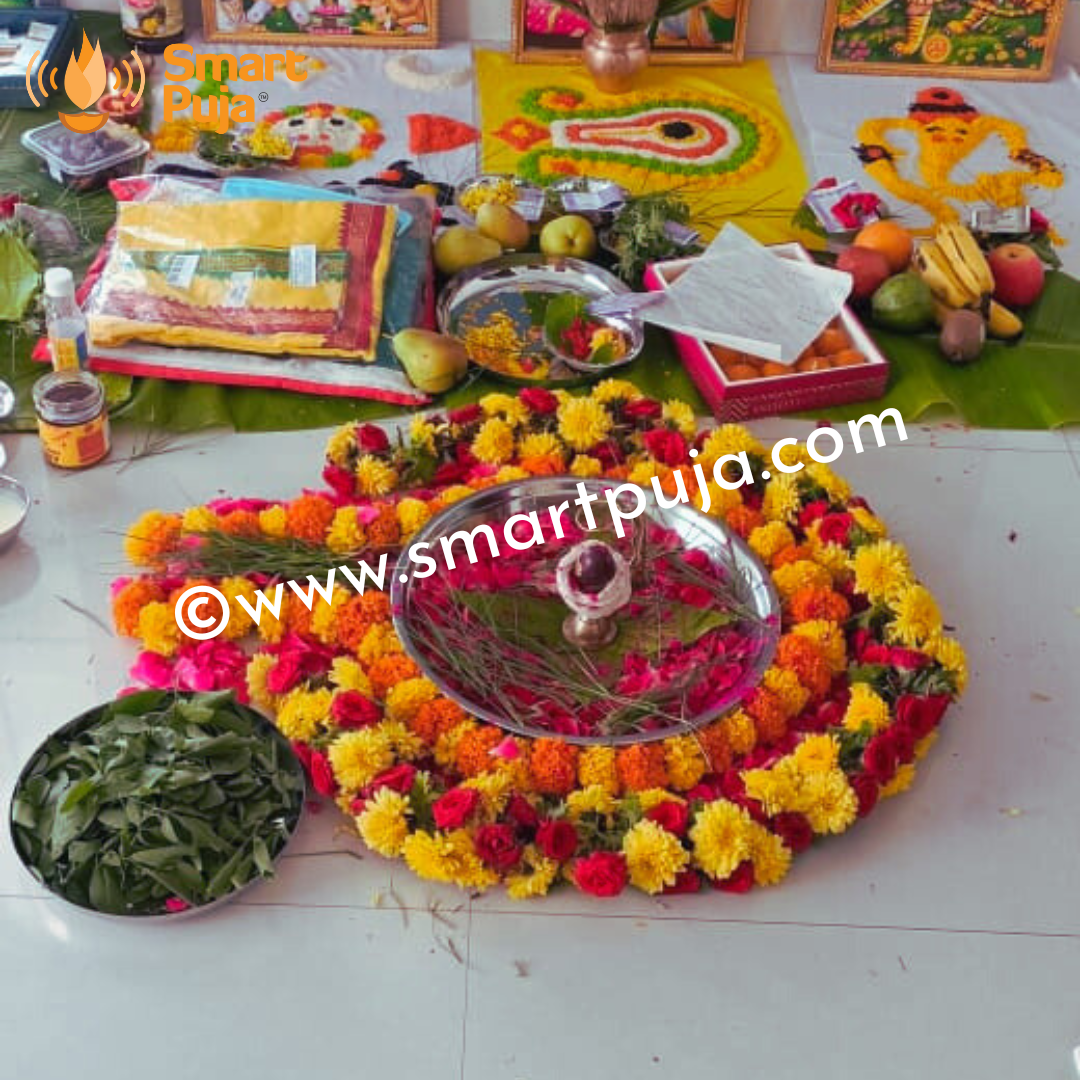
The observance is split into morning preparations and the main evening ritual.
Morning Rituals
- Bath & Sankalp: Wake up before sunrise (Brahma Muhurta). Take a purifying bath and wear clean, preferably red or orange, clothes.
- Vow (Sankalp): Take water in your right palm and take a mental vow to observe the fast with pure intentions for Rin Mukti.
- Hanuman Worship: Visit a Hanuman temple if possible. Offer vermillion (Sindoor), jasmine oil, and recite the Hanuman Chalisa.
Evening Pradosh Kaal Rituals (Sunset)
- Preparation: Take another bath roughly an hour before sunset. Clean the puja altar.
- Shiva Abhishek: Bathe the Shivalinga with pure water, followed by Panchamrit, and finally with water containing a little honey and red sandalwood.
- Offerings: Offer the Bilva leaves, applying sandalwood paste to the stalks. Offer the red flowers.
- Aarti: Light a ghee lamp, burn incense, and perform the Shiva Aarti.
Powerful Mantras to Chant
Chanting during the 90-minute Pradosh window amplifies the benefits of the fast:
- Shiva Panchakshari: “Om Namah Shivaya” (Chant 108 times)
- Maha Mrityunjaya Mantra: For health and protection.
- Mangal Beej Mantra: “Om Kram Kreem Kroum Sah Bhaumaya Namah”
- Rin Mukti Mangal Stotra: Reciting this specific Stotra on Bhauma Pradosh is considered a highly effective remedy for financial relief.
Fasting Rules (Vrat Niyam & Parana)
Maintaining purity of body and mind is essential.
What is Allowed (Phalahar):
- Fresh fruits, nuts, and milk.
- Sabudana (tapioca), Kuttu (buckwheat), or Singhara (water chestnut) flour preparations.
- Rock salt (Sendha Namak) instead of regular salt.
What to Avoid:
- Grains (rice, wheat, lentils) until the fast is broken.
- Onion, garlic, non-vegetarian food, and alcohol are strictly prohibited.
- Negative thoughts, anger, and arguments.
Parana (Breaking the Fast): The fast is traditionally broken after performing the evening Pradosh Kaal Puja. Devotees partake in the Bhog (Prasad) and consume a simple, Satvik meal.
Auspicious Donations (Daan)
Donation (Daan) is a key component of Bhauma Pradosh to pacify Mars. Auspicious items to donate to the needy or to a temple include:
- Red lentils (Masoor Dal)
- Jaggery (Gud)
- Copper utensils
- Red clothing
Pradosh Vrat Day Comparison
Every weekday imparts a different spiritual blessing to the Pradosh Vrat.
| Weekday | Name | Primary Blessing |
|---|---|---|
| Sunday | Ravi Pradosh | Longevity, Good Health & Vitality |
| Monday | Soma Pradosh | Mental Peace & Fulfillment of Desires |
| Tuesday | Bhauma Pradosh | Freedom from Debts & Health Issues |
| Wednesday | Budha Pradosh | Knowledge, Education & Progeny |
| Thursday | Guru Pradosh | Spiritual Growth & Ancestral Blessings |
| Friday | Shukra Pradosh | Wealth, Luxury & Marital Harmony |
| Saturday | Shani Pradosh | Career Success & Relief from Saturn’s Doshas |
🕉️ Remove Mangal Dosha & Seek Rin Mukti
A specialized Mangal Dosha Nivaran Puja or Rudrabhishek performed by an expert Vedic Pandit can help clear obstacles in marriage and finance. SmartPuja brings authentic Pandits and all Samagri directly to your home.
View Full Pradosham 2026 Calendar
Frequently Asked Questions (FAQs)
1. What is Bhauma Pradosh?
It is a sacred fasting day that occurs when the Pradosham Tithi (the 13th lunar day) falls on a Tuesday (Mangalvar). It is dedicated to Lord Shiva and Mars (Mangal) for debt relief.
2. When is the first Bhauma Pradosh in 2026?
The first Bhauma Pradosh of 2026 is on Tuesday, April 28, 2026.
3. Can women observe the Bhauma Pradosh fast?
Absolutely. Both men and women can observe this fast to seek blessings for their family’s health, prosperity, and relief from debts.
4. Which mantra is best for this day?
Chanting “Om Namah Shivaya”, reciting the Hanuman Chalisa, and reading the Rin Mukti Mangal Stotra are considered highly effective on this day.
5. Can Manglik people observe this fast?
Yes, it is highly recommended. Fasting on Bhauma Pradosh is one of the most powerful traditional remedies to pacify a malefic Mars (Mangal Dosha).
6. What should we eat during the fast?
Devotees consume a Satvik Phalahar diet consisting of fruits, milk, nuts, and non-grain flours like Kuttu or Sabudana. Regular salt is replaced with Sendha Namak (rock salt).
7. When do we break the fast (Parana)?
The fast is traditionally broken in the evening, after completing the Pradosh Kaal Shiva Puja and offering Aarti.
8. Is Rudrabhishek recommended on this day?
Yes, performing a Rudrabhishek during the Pradosh Kaal on a Tuesday is highly auspicious and is believed to rapidly clear financial and karmic blockages.
Sources & References
- Shiva Purana: Verses detailing the glory of Pradosh Vrat and the birth of Mangal.
- Skanda Purana: References to the significance of Tuesday worship for debt relief.
- Drik Panchang: Used for verifying accurate Tithi timings and Pradosh Kaal windows for 2026.
- Traditional Vedic Astrology & Panchang Calculations.
📍 Find Vedic Pandits in Your City