Kirtimukha: Meaning, Mythology & Temple Architecture
The Legend of Kirtimukha: Meaning, Mythology & Temple Architecture
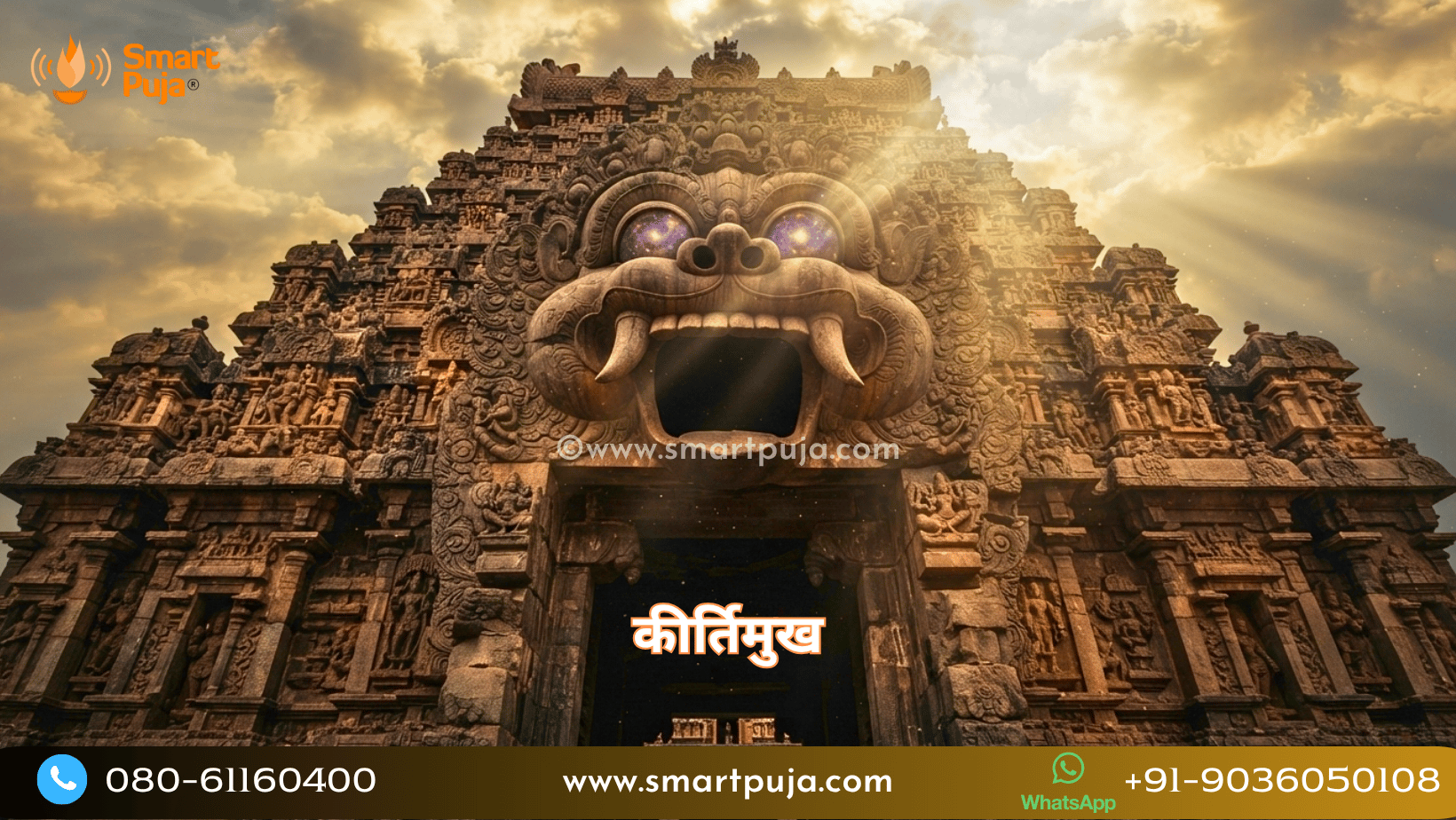
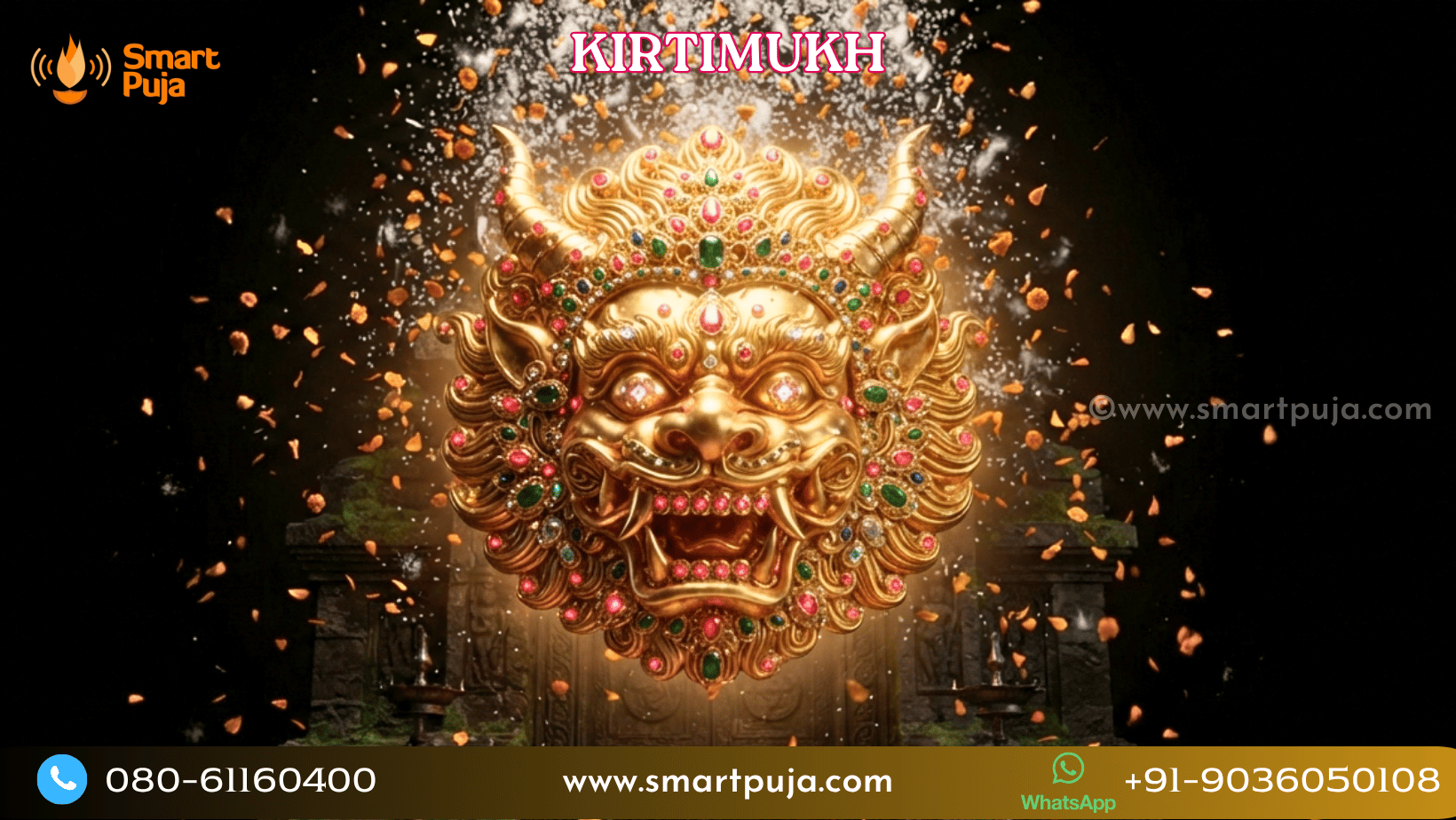
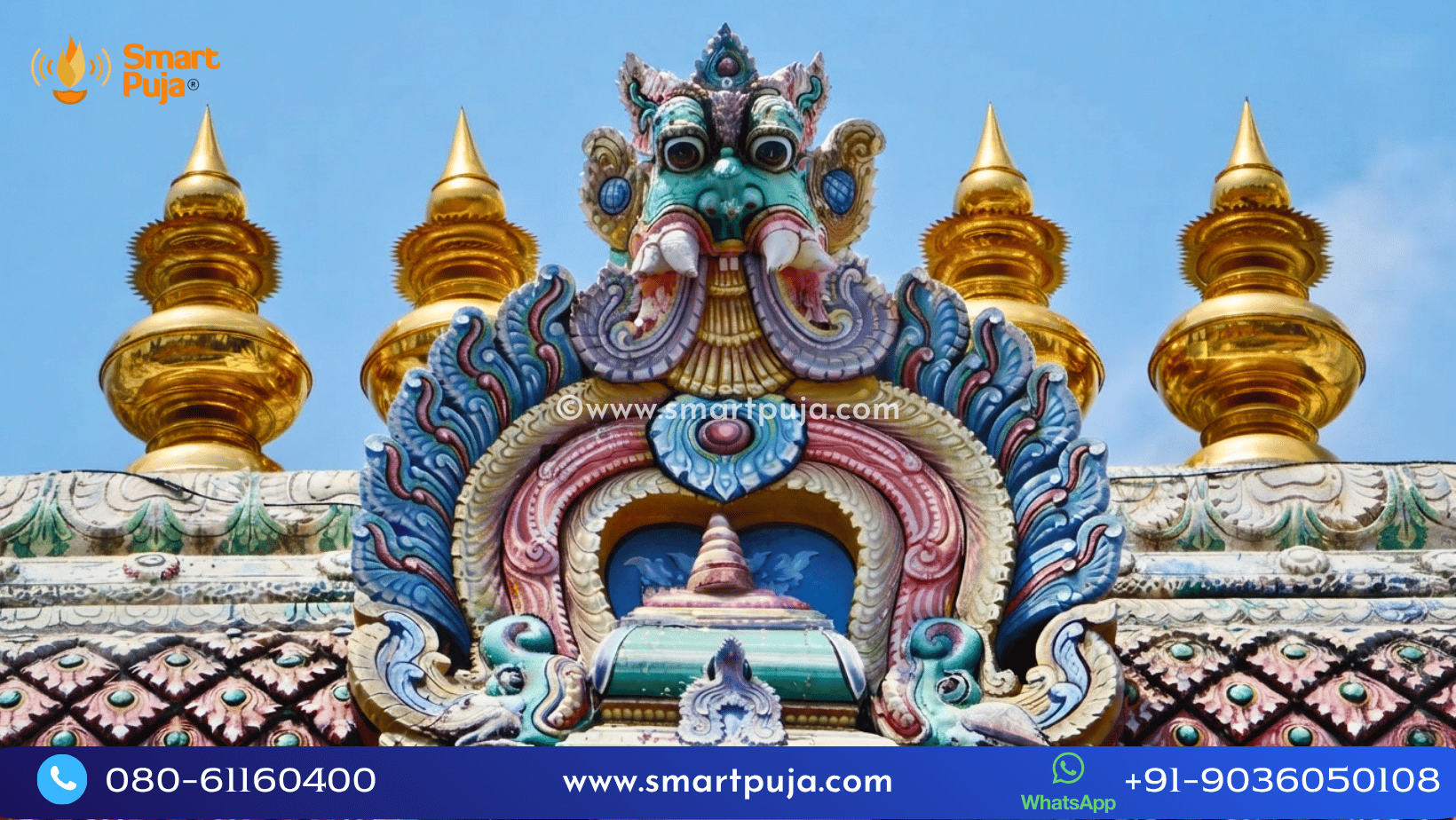
Walk through the threshold of any ancient Hindu temple—whether it is a sky-piercing Dravidian Gopuram in Tamil Nadu, an intricately chiseled Hoysala structure in Karnataka, or a centuries-old shrine in Southeast Asia—and you will encounter a recurring, captivating guardian. Positioned at the absolute highest apex of the main sanctuary door or crowning the ornate halo arch (Prabhavali) framing the deity sits a grotesque, ferocious, lion-like visage.
With massive, bulging eyeballs, sweeping horns, flared nostrils, and a gaping maw revealing razor-sharp fangs, this creature appears to be actively swallowing the very architecture around it. This enigmatic figure is known as Kirtimukha (frequently spelled Keerthi Mukh), which translates from Sanskrit as the “Face of Glory.”
Why does a tradition that celebrates serene, absolute beauty and ultimate cosmic peace place a terrifying, self-devouring monster above the heads of its most sacred Gods? The answer lies inside an extraordinary legend found within the ancient layers of the Shiva Purana and the Skanda Purana—a tale that blends cosmic warfare with a profound lesson on the destruction of human ego.
📋 Table of Contents
- 1. The Puranic Narrative: The Birth of the Face of Glory
- 2. Textual Variations: Shiva Purana vs. Skanda Purana
- 3. Iconography & The Structural Anatomy of Kirtimukha
- 4. The Geographical Journey: From India to Southeast Asia
- 5. The Esoteric Philosophy: Swallowing the Individual Ego
- 6. Vastu Shastra: Bringing Kirtimukha into the Modern Home
- 7. Frequently Asked Questions (FAQs)
1. The Puranic Narrative: The Birth of the Face of Glory
The legendary biography of Kirtimukha is set during an era of extreme cosmic upheaval. A powerful Asura (demon) king named Jalandhara had acquired unmatched power through intense tapashya (austerities). Having conquered the earthly realms and defeated the celestial Devas, Jalandhara’s pride swelled into absolute delusion. He declared himself the rightful master of everything in existence.
Learning that the supreme ascetic, Lord Shiva, resided on Mount Kailash with his extraordinarily radiant consort, Goddess Parvati, Jalandhara decided to claim her as his ultimate prize. He summoned his primary lieutenant—the deceptive, planetary demon Rahu, famous for swallowing the sun and moon during eclipses—and dispatched him to Kailash with an arrogant ultimatum: Shiva must surrender Parvati without a fight.
According to classical translations of the Shiva Purana, when Rahu arrived at the snow-peaked heights of Kailash and delivered the blasphemous message, Lord Shiva did not speak a word. Instead, his divine countenance shifted into absolute, unbridled fury. The energy of his wrath localized instantly at the center of his forehead, and his all-powerful Third Eye (Ajna Chakra) burst open.
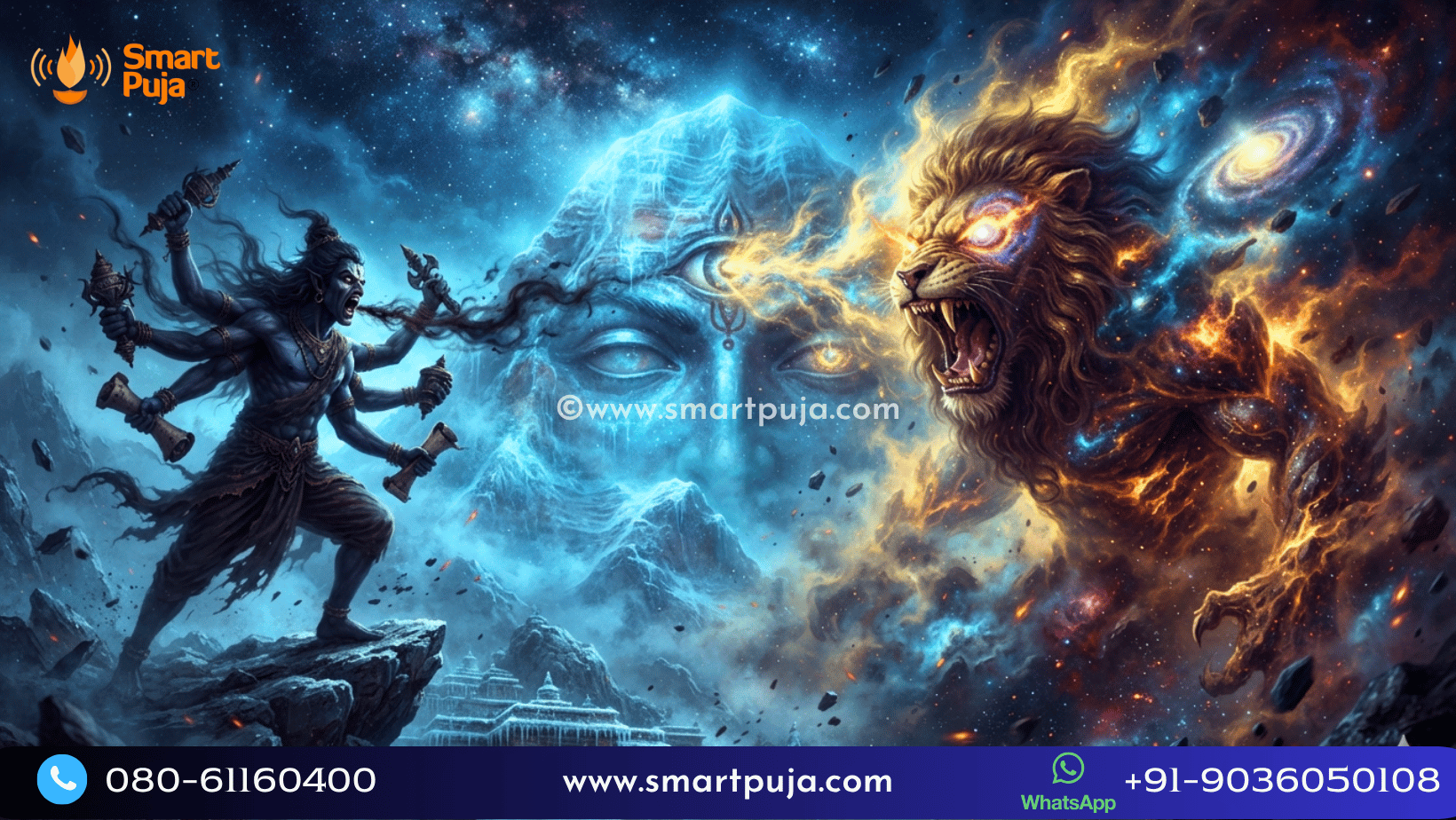
Out of this explosive cosmic fire emerged an entirely new entity: a colossal, emaciated, monstrous being. It possessed the roaring head of a wild lion, a mane made of dancing flames, chest-beating energy, and a body driven by a terrifying, boundless hunger. Seeing this horrific executioner materialize before him, Rahu instantly realized he was completely outmatched. He turned and fled, but the ravenous creature lunged through the sky to consume him.
Desperate and trapped, Rahu remembered the ancient cosmic law: anyone who explicitly begs for refuge (Sharanagati) cannot be harmed. He threw himself onto the frozen earth, crying out to Lord Shiva for mercy. Moved by the act of total surrender, the compassionate Mahadev commanded his creation to halt.
The monster stopped mid-air, trembling with raw, unsatisfied power. It looked down at Lord Shiva and cried out in distress:
Lord Shiva looked at the creature’s fierce loyalty and absolute obedience. To test the boundaries of its compliance, Shiva gave a jaw-dropping order: “If you are truly hungry, go ahead and eat yourself.”
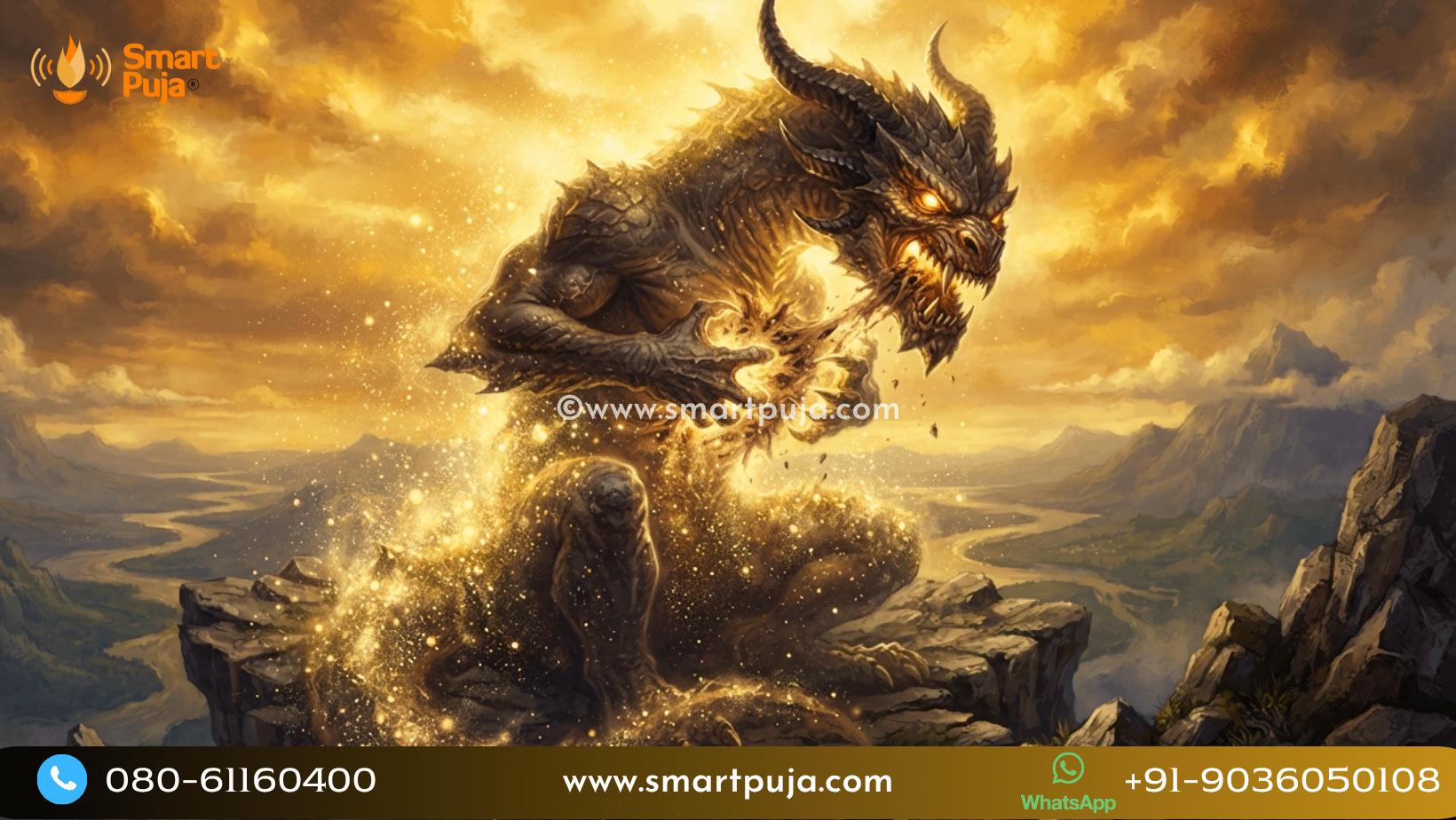
Without a single millisecond of hesitation or fear, the loyal monster began to devour its own body. Starting with its tail, it chewed upwards through its hind legs, its torso, its chest, and its front arms. Driven by pure devotion, it kept swallowing its own form until absolutely nothing remained but its roaring head, wide-open mouth, and upper jaw.
Witnessing this ultimate act of ego-free obedience and self-effacing sacrifice, Lord Shiva smiled with immense tenderness. He lifted the disembodied head and declared:
2. Textual Variations: Shiva Purana vs. Skanda Purana
While the root narrative remains beautifully consistent across classical Indian literature, subtle, fascinating variations exist within the distinct Puranic anthologies. These stories are often recited by Pandits during grand Mahashivratri celebrations:
| Feature | The Shiva Purana Account | The Skanda Purana Account |
|---|---|---|
| Primary Catalyst | The demonic arrogance of King Jalandhara demanding Parvati. | The battle with the demon Daitya Jalandhara, focusing heavily on Rahu’s role. |
| Physical Form | Described explicitly as lean, emaciated, with a roaring lion-like countenance. | Emphasized as a personified manifestation of Kala (Time) itself, swallowing creation. |
| Structural Placement | Placed directly at the main entrance doorframe of the temple sanctum. | Integrated natively into the grand external triumphal arches (Toranas). |
3. Iconography & The Structural Anatomy of Kirtimukha
In traditional Hindu architecture texts (the Shilpa Shastras), sculpting a Kirtimukha is treated with strict mathematical and spiritual precision. Master artisans break down the iconographic composition into standard signature features:
- The Missing Lower Jaw: Because the creature completely ate itself from the bottom up, classic Kirtimukha carvings do not feature a lower jaw. The upper teeth rest directly on the open frame of the doorway.
- The Foliage Garlands (Festoons): Streaming directly out from the corners of its open mouth are ornate, swirling vines, pearls, or leafy garlands. This represents the paradox of life emerging directly out of destruction.
- The Bulging Eyes (Simha-Chakshu): The spherical, prominent eyes symbolize the absolute, piercing vision of truth that instantly burns away deception.
4. The Geographical Journey: From India to Southeast Asia
As Hindu philosophy and architectural principles migrated across oceans, the visual representation of Kirtimukha evolved beautifully, adapting to the artistic traditions of different global cultures:
The North Indian Chola & Chalukyan Simhamukha
In traditional South Indian temple structures, Kirtimukha is heavily stylized. Over time, it merged slightly with the motif of the Simhamukha (Lion Face). In Hoysala temples, the carvings are incredibly lush, deep, and heavily filigreed, seamlessly blending into the complex stone friezes.
The Indonesian & Javanese “Kala” Face
In the historic temples of Java and Bali (such as Prambanan and Borobudur), Kirtimukha evolved into a massive architectural feature simply known as Kala. Here, it is frequently paired with Makara (the mythical sea monster), creating the iconic Kala-Makara archway that symbolizes the doorway between the earthly realm and the cosmic cosmos.
The Tibetan “Tsimuk”
In Tibetan Buddhist iconography, which inherited massive influences from Nepal and India, the face transformed into Tsimuk. It is often seen clutching jewels or protective canopy hangings, serving a virtually identical purpose: protecting the inner sanctuary from dark, chaotic spirits.
5. The Esoteric Philosophy: Swallowing the Individual Ego
Beyond the fascinating architectural history and mythology, Kirtimukha stands as a profound psychological and spiritual metaphor for the modern spiritual seeker:
The Dissolution of ‘Ahamkara’ (Ego)
The act of the monster eating its own body until nothing is left represents the systematic dissolution of the human ego. The ego is self-consuming by nature—our pride, greed, and attachments eventually end up destroying us from within. By placing Kirtimukha at the gate, the temple reminds you: “Leave your ego out here if you wish to see the Divine inside.”
The Devouring Nature of Time (Kala)
Time is the ultimate consumer. Every single material form born into this universe is slowly being eaten by the ticking clock. Kirtimukha stands as a visual representation of Time itself, reminding us of the impermanent nature of our physical lives.
6. Vastu Shastra: Bringing Kirtimukha into the Modern Home
In classical Vastu Shastra (the ancient Indian science of architecture), the placement of a Kirtimukha emblem holds immense practical value for household protection. This is a common remedy suggested during a traditional Vastu Shanti Puja:
- The Ultimate Shield Against ‘Buri Nazar’: Hanging a Kirtimukha plaque, mask, or tile directly above the outside frame of your main entrance door acts as a protective shield. It absorbs and neutralizes the “evil eye,” jealousy, and negative thoughts of visitors before they cross your threshold.
- Correcting Vastu Doshas: If your home entrance faces an astrologically challenging direction or looks out toward a graveyard, T-junction, or large obstructive tree, installing a Kirtimukha corrects these environmental imbalances.
- Altar Maintenance: Ensure the Kirtimukha mask placed at your home entrance is regularly dusted, cleaned, and kept well-maintained to keep its protective energy vibrant.
7. Frequently Asked Questions (FAQs)
References & Literary Sources: Narrative frameworks adapted from the Skanda Purana (Prabhasa Khanda) and the Shiva Purana (Rudra Samhita). Iconographic principles compiled from classical Shilpa Shastra manuals including the Mayamata and Manasara architectural texts.
📍 Find Vedic Pandits in Your City