Shravan Maas 2026: Dates, Somvar List, Puja Vidhi &…
Shravan Maas 2026: Dates, Rituals, Mantras & Significance
Last Updated: 25 June 2026
Reviewed by: Vedic Scholars & Certified Priests of SmartPuja
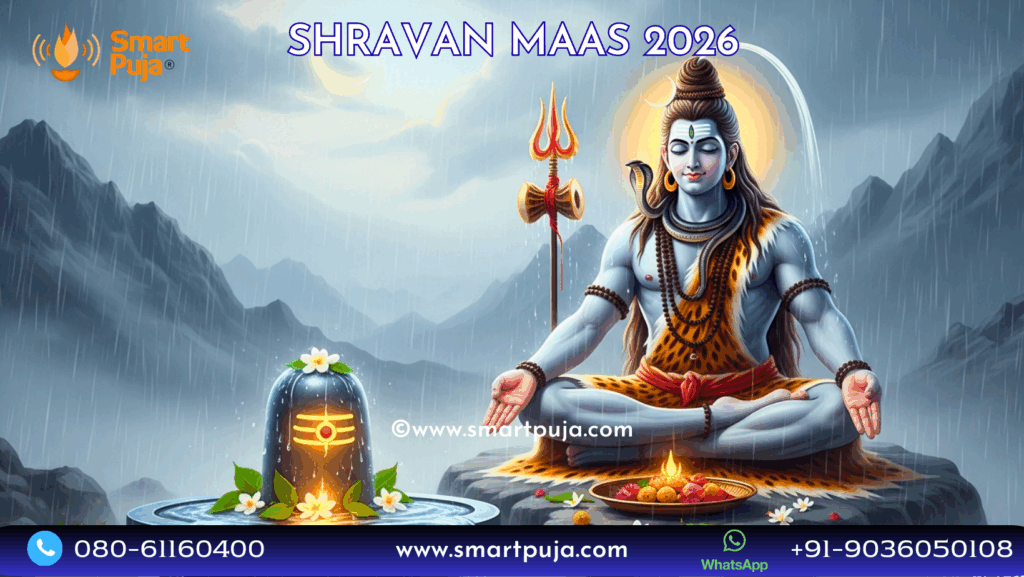
Shravan Maas (also called Sawan Maas) is the fifth and holiest month in the Hindu calendar, dedicated entirely to Lord Shiva. Falling during the peak monsoon season, this month signifies the spiritual union of Shiva and Shakti (Parvati). It is believed that Goddess Parvati performed intense penance (Tapasya) during this month to please Lord Shiva and win him as her consort.
Shravan Maas 2026 Quick Facts
Shravan Maas 2026 begins on July 30 and ends on August 28 in North India. In South India, it begins on August 13 and ends on September 11.
- North India Sawan: July 30 – August 28
- South India Sawan: August 13 – September 11
- 1st Sawan Somvar (North): August 3
- 1st Sawan Somvar (South): August 17
Table of Contents
According to Vedic scriptures, this is the best time to please Mahadev. Every Monday (Shravan Somvar) during this period is considered highly auspicious for fasting and performing Rudrabhishek Puja. Devotees believe that worshipping Lord Shiva washes away sins, removes the fear of untimely death (Akaal Mrityu), and fulfills all righteous desires.
Shravan Maas 2026 Dates (North vs. South)
The dates for Shravan differ based on the lunar calendar followed in your region. This 15-day difference occurs because North India follows the Purnimanta calendar (month ends on Full Moon), while South and West India follow the Amavasyant calendar (month ends on New Moon).
| Region | Start Date | End Date |
|---|---|---|
| North India (Rajasthan, UP, MP, Punjab, Bihar, Delhi) |
July 30, 2026 (Thursday) |
August 28, 2026 (Friday) |
| South & West India (Maharashtra, Gujarat, Karnataka, TN, AP) |
August 13, 2026 (Thursday) |
September 11, 2026 (Friday) |
Sawan Somvar Vrat Dates 2026
Fasting on Mondays (Somvar) is the most significant ritual of Sawan. Many unmarried women observe the Solah Somvar Vrat (16 Mondays Fast) starting from the first Monday of this month to pray for a good husband, while married women fast for the longevity and health of their partners.
- 1st Somvar: August 3, 2026
- 2nd Somvar: August 10, 2026
- 3rd Somvar: August 17, 2026
- 4th Somvar: August 24, 2026
- 1st Somvar: August 17, 2026
- 2nd Somvar: August 24, 2026
- 3rd Somvar: August 31, 2026
- 4th Somvar: September 7, 2026
Planning Rudrabhishek on Sawan Somvar?
✓ Verified Vedic Pandits ✓ Complete Puja Samagri ✓ Home Services in 30+ Cities
Scientific Reason: Why Fast in Shravan?
- Weak Digestion: According to Ayurveda, the Vata dosha is aggravated, and the digestive fire (Jatharagni) is at its weakest during peak monsoon. Fasting helps detoxify the system.
- Waterborne Diseases: Monsoons bring a high risk of infections. The tradition of avoiding leafy vegetables (which attract insects) is rooted in hygiene.
- Why offer Milk? In ancient times, cows often grazed on fresh monsoon grass, making their milk heavy and harder to digest. Thus, in many traditions, it is customary to offer raw milk to the Shivling rather than consuming it.
The Legend of Samudra Manthan
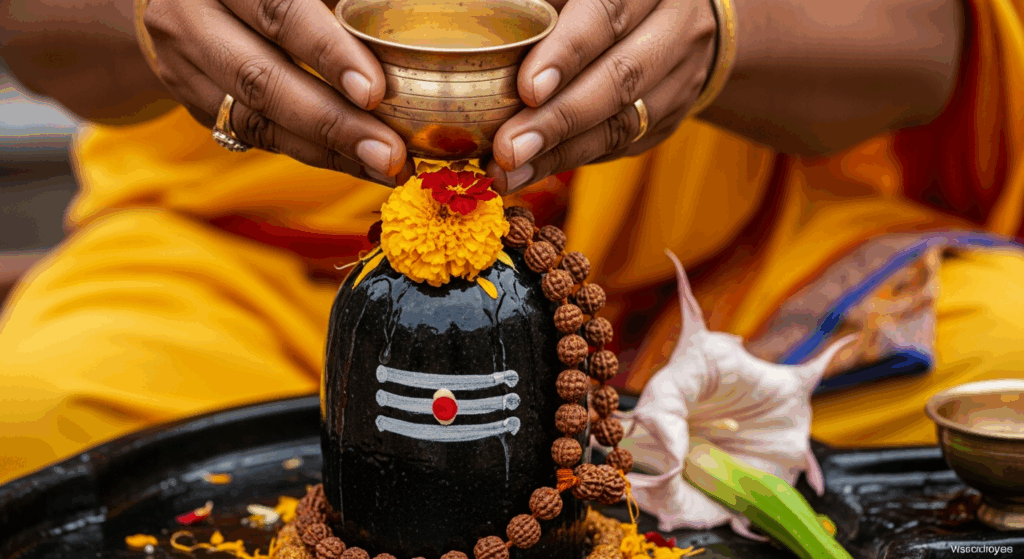
During the cosmic churning of the ocean (Samudra Manthan) by Devas and Asuras, a deadly poison called Halahal emerged. It was potent enough to destroy the universe. To save creation, Lord Shiva drank this poison, which turned his throat blue (earning him the name Neelkantha). To cool the burning effect of the poison, the Devas offered him water from the Holy Ganges. This monumental event occurred in Shravan Maas. Therefore, offering water (Jalabhishek) to the Shivling in this month is considered the highest form of worship.
Powerful Shiva Mantras for Shravan
Chanting these mantras during the Brahma Muhurta (early morning) or Pradosh Kaal generates immense positive energy:
“Om Namah Shivaya”
(Salutations to the Auspicious One)
“Om Tryambakam Yajamahe Sugandhim Pushti-Vardhanam
Urvarukamiva Bandhanan Mrityor Mukshiya Maamritat”
(We worship the Three-Eyed One, who nourishes all beings. May He liberate us from death for the sake of immortality.)
Do’s and Don’ts During Shravan Maas
- Wake up early during Brahma Muhurta.
- Offer Bel Patra, Dhatura, & raw milk to the Shivling.
- Observe Somvar fasts and maintain a Satvik diet.
- Perform Shiv Puja at home or visit temples.
- Strictly avoid non-veg, alcohol, onion, and garlic.
- Avoid shaving or getting haircuts if observing a full month vow.
- Avoid using turmeric or kumkum on the Shivling.
- Avoid disrespecting elders or helpless beings.
Book Rudrabhishek Pandit in Your City
Shravan is the ideal time to perform Rudrabhishek or Maha Mrityunjaya Homa to remove planetary doshas. SmartPuja offers verified Vedic Pandits in:
Frequently Asked Questions
In North India (Rajasthan, UP, Bihar, etc.), Shravan Maas 2026 starts on July 30, 2026.
In Maharashtra, Gujarat, and South India, Shravan Maas 2026 begins on August 13, 2026.
There are a total of 4 Sawan Somvars in 2026, regardless of whether you follow the North Indian or South Indian calendar.
Performing Rudrabhishek Puja, Maha Mrityunjaya Jaap, and Laghu Rudra Homa during Shravan Maas are considered highly auspicious and yield maximum spiritual benefits.
Yes, unmarried women often observe the Solah Somvar Vrat to seek a good husband, while married women fast for their husband’s longevity and familial peace.
It is strictly advised to avoid non-vegetarian food, alcohol, onion, garlic, and leafy green vegetables during the holy month of Shravan.
Scientifically, digestion is weak during monsoons, and raw milk can be hard to digest. Spiritually, offering it to Shiva symbolizes surrendering one’s sustenance and ego to the Divine.
📍 Find Vedic Pandits in Your City