Durga Ashtottara Shatanamavali: 108 Names of Durga, Meaning &…
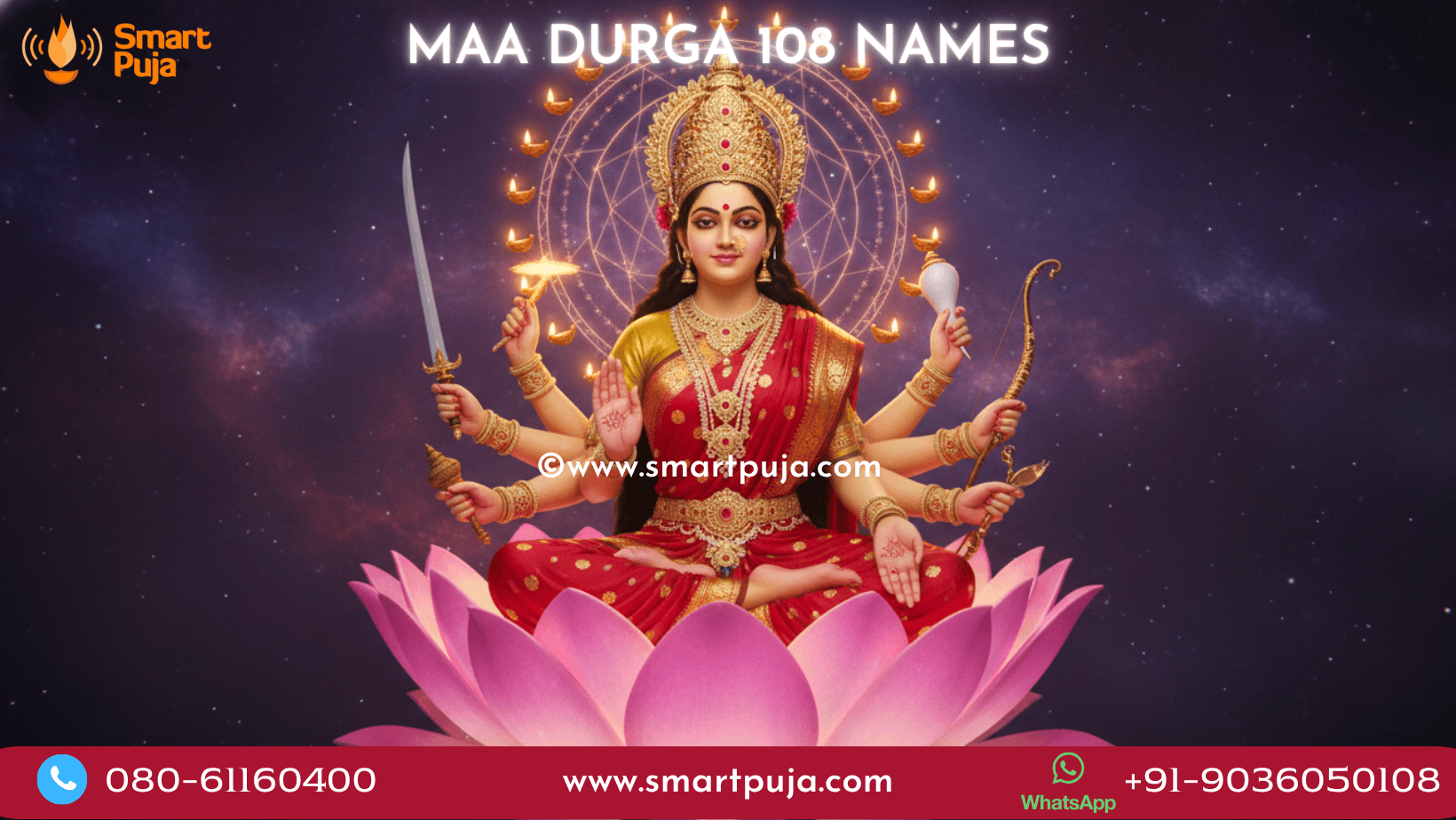
Durga Ashtottara Shatanamavali: 108 Names of Durga, Meaning & Benefits
By Vedic Experts at SmartPuja | Reviewed by Senior Pandit Vidyadhar Shastri
The Durga Ashtottara Shatanamavali is a sacred Vedic hymn comprising the 108 names of Goddess Durga. Chanting these 108 powerful names invokes the divine mother’s supreme energy, destroying fear, removing severe life obstacles, and granting the devotee immense peace, wealth, and spiritual liberation.
In Sanatana Dharma, the number 108 holds profound cosmic significance, representing the spiritual completion of the universe. When we recite the 108 names of Goddess Durga, we are not merely calling out titles; we are invoking 108 distinct frequencies of the Divine Mother’s energy. From the fiercely protective Bhavani to the supremely peaceful Mahagauri, the Durga Ashtottara Shatanamavali encapsulates the entirety of feminine cosmic power (Shakti).
Whether you are preparing for Maha Ashtami, fasting for Masik Durga Ashtami, or seeking a powerful daily prayer to overcome life’s hurdles, this complete guide provides the Sanskrit lyrics, English pronunciations, and deep meanings of each name.
📋 Table of Contents
1. The Origin of the 108 Names
The Durga Ashtottara Shatanamavali Stotram originates from the ancient Vishwasara Tantra. According to scriptural legends, Lord Shiva himself revealed these 108 names to Goddess Parvati, explaining that whoever recites this stotram with pure devotion will be freed from all worldly sorrows and find nothing impossible in the three worlds.
2. Durga Ashtottara Shatanamavali (Sanskrit, English & Meaning)
To perform the Japa correctly, prefix each name with “Om” (ॐ) and suffix it with “Namah” (नमः). For example: “Om Satyai Namah.”
Names 1 to 27
- १. सती (Sati): The one who got burned alive for honor.
- २. साध्वी (Sadhvi): The Sanguine; optimistic.
- ३. भवप्रीता (Bhavaprita): One who is loved by the universe.
- ४. भवानी (Bhavani): The abode of the universe.
- ५. भवमोचनी (Bhavamochani): The absolver of the universe.
- ६. आर्या (Arya): The Goddess.
- ७. दुर्गा (Durga): The invincible.
- ८. जया (Jaya): The victorious.
- ९. आद्या (Aadya): The initial reality.
- १०. त्रिनेत्रा (Trinetra): One who has three eyes.
- ११. शूलधारिणी (Shooladharini): Bearer of the trident.
- १२. पिनाकधारिणी (Pinakadharini): Bearer of Shiva’s bow.
- १३. चित्रा (Chitra): The picturesque.
- १४. चण्डघण्टा (Chandaghanta): Having mighty bells.
- १५. महातपा (Mahatapa): Performing severe penance.
- १६. मन (Manah): The mind.
- १७. बुद्धि (Buddhi): Intelligence.
- १८. अहङ्कारा (Ahankara): One with pride.
- १९. चित्तरूपा (Chittarupa): She who is in a state of thought.
- २०. चिता (Chita): The funeral pyre (destroyer of death).
- २१. चिति (Chiti): The thinking mind.
- २२. सर्वमन्त्रमयी (Sarvamantramayi): Possessing all instruments of thought.
- २३. सत्ता (Satta): The existence.
- २४. सत्यानन्द स्वरूपिणी (Satyanandaswarupini): Form of eternal bliss.
- २५. अनन्ता (Ananta): The infinite.
- २६. भाविनी (Bhavini): The beautiful woman.
- २७. भाव्या (Bhavya): Represents future and magnificence.
Names 28 to 54
- २८. भव्या (Bhavya): With magnificence.
- २९. अभव्या (Abhavya): Beyond fear.
- ३०. सदागति (Sadagati): Always bestowing Moksha (salvation).
- ३१. शाम्भवी (Shambhavi): Consort of Shambhu (Shiva).
- ३२. देवमाता (Devamata): Mother Goddess.
- ३३. चिन्ता (Chinta): Thought or tension.
- ३४. रत्नप्रिया (Ratnapriya): Lover of jewels.
- ३५. सर्वविद्या (Sarvavidya): Knowledgeable.
- ३६. दक्षकन्या (Dakshakanya): Daughter of Daksha.
- ३७. दक्षयज्ञविनाशिनी (Dakshayajnavinashini): Interrupter of Daksha’s sacrifice.
- ३८. अपर्णा (Aparna): One who didn’t even eat leaves during penance.
- ३९. अनेकवर्णा (Anekavarna): Having many complexions.
- ४०. पाटला (Patala): Red in color.
- ४१. पाटलावती (Patalavati): Wearing a red dress.
- ४२. पट्टाम्बरपरीधाना (Pattambaraparidhana): Wearing silk raiments.
- ४३. कलमञ्जीररञ्जिनी (Kalamanjiraranjini): Wearing a musical anklet.
- ४४. अमेयविक्रमा (Ameyavikrama): Of immeasurable valor.
- ४५. क्रूरा (Krura): Cruel (to demons).
- ४६. सुन्दरी (Sundari): The gorgeous.
- ४७. सुरसुन्दरी (Surasundari): Extremely beautiful.
- ४८. वनदुर्गा (Vanadurga): Goddess of forests.
- ४९. मातङ्गी (Matangi): Goddess of Matanga.
- ५०. मतङ्गमुनिपूजिता (Matangamunipujita): Worshipped by Sage Matanga.
- ५१. ब्राह्मी (Brahmi): Power of Brahma.
- ५२. माहेश्वरी (Maheshwari): Power of Shiva.
- ५३. ऐन्द्री (Aeindri): Power of Indra.
- ५४. कौमारी (Kaumari): The adolescent.
Names 55 to 81
- ५५. वैष्णवी (Vaishnavi): The invincible.
- ५६. चामुण्डा (Chamunda): Slayer of Chanda and Munda.
- ५७. वाराही (Varahi): Riding a boar.
- ५८. लक्ष्मी (Lakshmi): Goddess of Wealth.
- ५९. पुरुषाकृति (Purushakriti): Taking the form of a man.
- ६०. विमला (Vimala): The pure one.
- ६१. उत्कर्षिणी (Utkarshini): The most excellent.
- ६२. ज्ञाना (Jnana): Full of Knowledge.
- ६३. क्रिया (Kriya): The action.
- ६४. नित्या (Nitya): The eternal one.
- ६५. बुद्धिदा (Buddhida): The bestower of wisdom.
- ६६. बहुला (Bahula): Abundant.
- ६७. बहुलप्रेमा (Bahulaprema): One who is universally loved.
- ६८. सर्ववाहनवाहना (Sarvavahanavahana): One who rides all vehicles.
- ६९. निशुम्भशुम्भहननी (Nishumbhashumbhahanani): Slayer of Shumbha and Nishumbha.
- ७०. महिषासुरमर्दिनी (Mahishasuramardini): Slayer of Mahishasura.
- ७१. मधुकैटभहन्त्री (Madhukaitabhahantri): Slayer of Madhu and Kaitabha.
- ७२. चण्डमुण्डविनाशिनी (Chandamundavinashini): Destroyer of Chanda and Munda.
- ७३. सर्वासुरविनाशा (Sarvasuravinasha): Destroyer of all demons.
- ७४. सर्वदानवघातिनी (Sarvadanavaghatini): Slaying all demons.
- ७५. सर्वशास्त्रमयी (Sarvashastramayi): One who is deft in all theories.
- ७६. सत्या (Satya): The truth.
- ७७. सर्वास्त्रधारिणी (Sarvastradharini): Possessor of all missile weapons.
- ७८. अनेकशस्त्रहस्ता (Anekashastrahasta): Possessor of many hand weapons.
- ७९. अनेकास्त्रधारिणी (Anekastradharini): Possessor of multiple weapons.
- ८०. कुमारी (Kumari): The beautiful adolescent.
- ८१. एककन्या (Ekakanya): The girl child.
Names 82 to 108
- ८२. कैशोरी (Kaishori): The adolescent.
- ८३. युवती (Yuvati): The youthful woman.
- ८४. यति (Yati): Ascetic, one who renounces the world.
- ८५. अप्रौढा (Apraudha): The one who never gets old.
- ८६. प्रौढा (Praudha): The mature woman.
- ८७. वृद्धमाता (Vriddhamata): The old mother.
- ८८. बलप्रदा (Balaprada): The bestower of strength.
- ८९. महोदरी (Mahodari): One who has a huge belly (holding the universe).
- ९०. मुक्तकेशी (Muktakeshi): One who has open tresses.
- ९१. घोररूपा (Ghorarupa): Having a fierce outlook.
- ९२. महाबला (Mahabala): Having immense strength.
- ९३. अग्निज्वाला (Agnijwala): Poignant like fire.
- ९४. रौद्रमुखी (Raudramukhi): Having a fierce face like destroyer Rudra.
- ९५. कालरात्रि (Kalaratri): Goddess who is black like night.
- ९६. तपस्विनी (Tapasvini): One who is engaged in penance.
- ९७. नारायणी (Narayani): The destructive aspect of Lord Narayana.
- ९८. भद्रकाली (Bhadrakali): Fierce form of Kali.
- ९९. विष्णुमाया (Vishnumaya): The spell of Lord Vishnu.
- १००. जलोदरी (Jalodari): Abode of the ethereal universe.
- १०१. शिवदूती (Shivaduti): Ambassador of Lord Shiva.
- १०२. करालि (Karali): The fierce.
- १०३. अनन्ता (Ananta): The immeasurable.
- १०४. परमेश्वरी (Parameshwari): The ultimate Goddess.
- १०५. कात्यायनी (Katyayani): The goddess worshipped by Sage Katya.
- १०६. सावित्री (Savitri): Daughter of the Sun God.
- १०७. प्रत्यक्षा (Pratyaksha): The real, observable.
- १०८. ब्रह्मवादिनी (Brahmavadini): One who is present everywhere.
3. How to Chant the 108 Names (Japa Vidhi)
To extract the absolute highest spiritual energy from this stotram, follow these traditional Vedic guidelines:
- Time: Chant during the Brahma Muhurat (4:00 AM – 5:30 AM) or at sunset (Sandhya Kaal).
- Posture: Sit facing East or North on a clean red or yellow asan (mat).
- Mala: If counting, use a Rakta Chandan (Red Sandalwood) mala, as red attracts the dynamic energy of Shakti.
- Offerings: Light a pure cow ghee diya and offer a red hibiscus or marigold flower to an idol or image of Maa Durga.
4. Incredible Benefits of Chanting
The Vishwasara Tantra explicitly states that chanting these names is equal to performing major Vedic sacrifices. The core benefits include:
- Absolute Protection: Like an armor (Kavach), it protects the chanter from black magic, evil eyes, and hidden enemies.
- Victory Over Obstacles: Whether facing court cases, career hurdles, or financial debts, the energy of Durganashini clears the path.
- Inner Strength: It eradicates anxiety and depression, replacing them with the supreme confidence of a warrior.
- Navratri Blessings: Chanting this during the 9 days of Navratri yields results multiplied by thousands of times.
Amplify Your Blessings with a Navchandi Havan
While daily chanting transforms your mind, performing a physical Vedic ritual transforms your environment and destiny.
Book a highly potent Navchandi Puja and Havan with SmartPuja. Our verified Pandits bring 100% authentic samagri to your doorstep and perform the full Durga Saptashati Paath, invoking the highest protective energies for your family.
Explore the Durga Mantra Cluster
To deepen your devotion, explore our expertly curated guides on other powerful stotrams and dates:
- 🌸 The Short Chant: Understand the power of the 32 Names of Goddess Durga (Dwatrinsh Naam Mala).
- 🌸 Monthly Observance: Keep track of the Masik Durga Ashtami 2026 Vrat Dates.
- 🌸 The Big Festival: Prepare for the ultimate Maha Durga Ashtami (Kanya Puja Vidhi).
5. Frequently Asked Questions (FAQs)
1. What happens if we read 108 names of Durga daily?
Chanting the Durga Ashtottara Shatanamavali daily creates a powerful spiritual shield, removes negativity, grants mental clarity, and attracts wealth and prosperity into your life. It ensures the constant presence of the Divine Mother’s grace.
2. Which time is best to chant Durga Ashtottara Shatanamavali?
The most auspicious times are during the Brahma Muhurat (4:00 AM – 5:30 AM) or during the evening Sandhya Kaal (sunset). Chanting it especially during Navratri or Ashtami Tithi exponentially amplifies the spiritual benefits.
3. What is the difference between the 32 names and 108 names of Durga?
The 32 names (Dwatrinsh Naam Mala) focus primarily on Durga as the ‘remover of severe difficulties’ (Durgati Nashini). The 108 names comprehensively cover all her cosmic forms, attributes, and pastimes, invoking holistic blessings of peace, power, and ultimate wisdom.
📍 Find Vedic Pandits in Your City