Om Namah Shivaya Meaning, Benefits & The Panchakshari Mantra
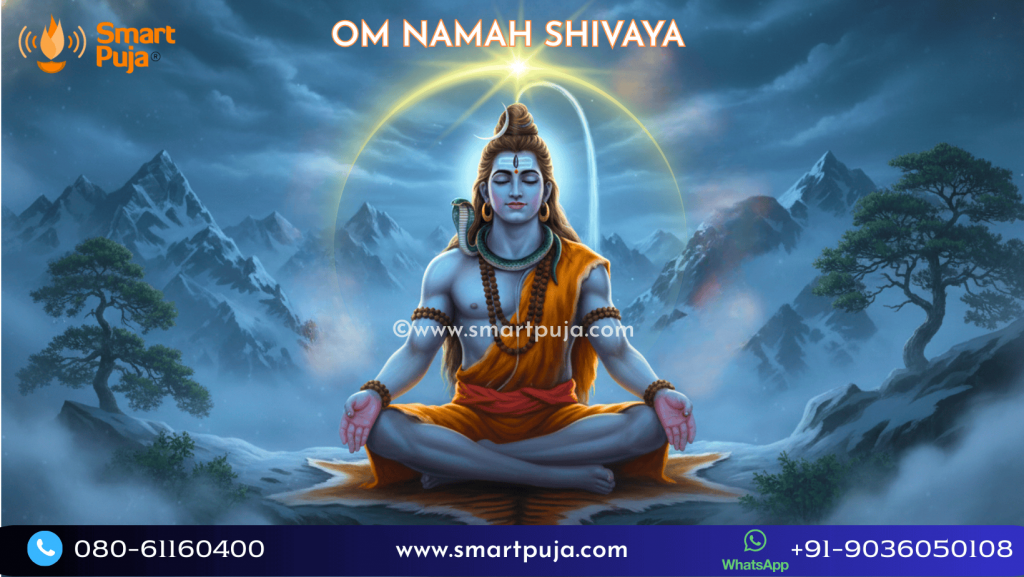
Om Namah Shivaya Meaning: The Power of the Panchakshari Mantra
Om Namah Shivaya means “I bow to Lord Shiva.” Spiritually, it represents surrendering the ego to the supreme universal consciousness. Understanding the true om namah shivaya mantra meaning helps purify the five elements within the body, bringing profound peace, fearless protection, and spiritual awakening.
Of all the mantras chanted across the globe, few carry the profound cosmic weight, raw energetic power, and serene tranquility of this sacred chant. It is not merely a combination of Sanskrit words; it is considered the very heartbeat of the universe, a sonic representation of creation, preservation, and dissolution.
Known in Vedic traditions as the Panchakshari Mantra (the five-syllabled mantra), it is the supreme chant dedicated to Lord Shiva—the ultimate reality, the inner self, and the destroyer of ignorance. Whether you hear it echoing from ancient Himalayan temples or murmuring softly in a modern home, its vibrational resonance has an undeniable impact on the human spirit.
But what does “Om Namah Shivaya” truly mean? How do its five syllables map to the physical universe and the human body? In this ultimate 2026 guide, we will break down the deep anatomy of the most beloved mantra in Sanatana Dharma.
📋 Table of Contents
- 1. What is the Literal Meaning of Om Namah Shivaya?
- 2. The Panchakshari Mantra: Breaking Down the 5 Syllables
- 3. Om Namah Shivaya Meaning in Hindi
- 4. Can Om Namah Shivaya Remove Negative Energy?
- 5. Is Om Namah Shivaya a Beej Mantra?
- 6. Spiritual and Scientific Benefits of Chanting
- 7. How and When to Chant Om Namah Shivaya
- 8. The Scriptural Origin: The Shri Rudram
1. What is the Literal Meaning of Om Namah Shivaya?
To understand the mantra, we must look at its literal translation when observing om namah shivaya in sanskrit:
- Om (ॐ): The primordial sound of the universe. It is the vibration from which all creation originated. It signifies the supreme, absolute reality (Brahman).
- Namah (नमः): Translates to “I bow,” “I honor,” or “I surrender.” It is the act of letting go of the individual ego (Ahamkara).
- Shivaya (शिवाय): Translates to “To Shiva.” However, the word “Shiva” literally means “that which is not” or “the auspicious one.” It represents the vast, empty void of the cosmos and the pure, unconditioned consciousness that resides within all of us.
The Spiritual Translation
“I bow to the supreme consciousness. I surrender my individual ego to the divine reality that exists within me and everywhere in the universe.”
2. The Panchakshari Mantra: Breaking Down the 5 Syllables
When the syllable “Om” is temporarily removed, the core of the mantra is “Na – Mah – Shi – Va – Ya”. This is why it is called the Panchakshari Mantra (Pancha = Five, Akshara = Syllables/Letters).
According to the Shiva Purana and Tantric texts, exploring the om namah shivay meaning reveals that these five syllables are not arbitrary. They are perfectly aligned with the Pancha Bhoota (the five elements of nature) that make up the entire physical universe, as well as the energy centers (Chakras) in the human body.
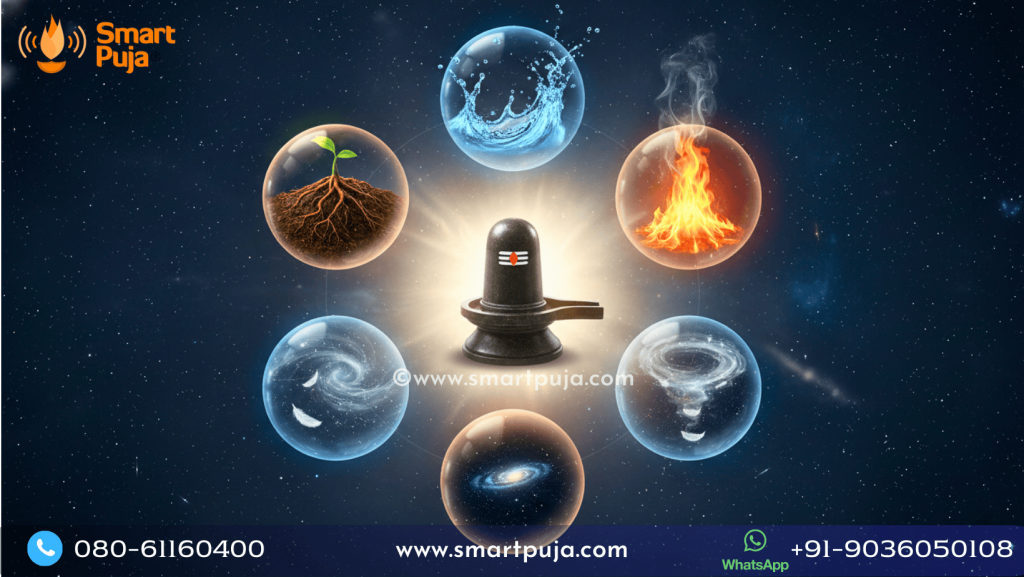
Na (न) – The Earth Element
Element: Prithvi (Earth)
Chakra: Muladhara (Root Chakra)
Significance: Represents grounding, stability, and survival. Chanting ‘Na’ purifies our earthly attachments and material desires.
Ma (म) – The Water Element
Element: Jala (Water)
Chakra: Swadhisthana (Sacral Chakra)
Significance: Represents fluidity, emotions, and creation. ‘Ma’ purifies our deepest desires, fears, and emotional turbulent states.
Shi (शि) – The Fire Element
Element: Agni (Fire)
Chakra: Manipura (Navel Chakra)
Significance: Represents transformation, digestion, and energy. ‘Shi’ acts as the fire that burns away our negative karmas and ignorance.
Va (वा) – The Air Element
Element: Vayu (Air)
Chakra: Anahata (Heart Chakra)
Significance: Represents breath, movement, and love. ‘Va’ purifies the prana (life force) flowing through us, opening us to universal compassion.
Ya (य) – The Space Element
Element: Akasha (Space/Ether)
Chakra: Vishuddhi (Throat Chakra)
Significance: Represents the vast, limitless emptiness from which everything arises. ‘Ya’ connects the individual soul to the infinite, boundless consciousness of Shiva.
Therefore, when you chant Om Namah Shivaya, you are actively purifying and harmonizing the five fundamental elements within your own body, bringing yourself into perfect alignment with nature.
3. Om Namah Shivaya Meaning in Hindi (ओम नमः शिवाय का अर्थ)
भारत में इस पंचाक्षरी मंत्र का जाप हर शिवालय और घर में होता है। इसका हिंदी में अर्थ अत्यंत सरल लेकिन बहुत गहरा है।
ओम नमः शिवाय का शाब्दिक अर्थ:
- ओम: संपूर्ण ब्रह्मांड की प्रथम और परम ध्वनि (परमात्मा)।
- नमः: मैं नमन करता हूँ या झुकता हूँ (अहंकार का त्याग)।
- शिवाय: भगवान शिव को, जो परम कल्याणकारी और इस सृष्टि के मूल हैं।
संपूर्ण भावार्थ: “मैं अपने भीतर और इस ब्रह्मांड में व्याप्त उस परम कल्याणकारी चेतना (भगवान शिव) को अपना अहंकार त्याग कर प्रणाम करता हूँ।” यह मंत्र मनुष्य के पंचभूतों (पृथ्वी, जल, अग्नि, वायु और आकाश) को शुद्ध कर आत्मा को परमात्मा से जोड़ता है।
4. Can Om Namah Shivaya Remove Negative Energy?
Yes. The sound vibrations produced by chanting this mantra are incredibly potent. It acts as an energetic shield that helps remove negativity from your mind and immediate environment. For those struggling with persistent stress, overthinking, or anxiety, it serves as a powerful mantra for stress relief, clearing out stagnant energy and replacing it with a deep sense of fearless calm.
5. Is Om Namah Shivaya a Beej Mantra?
Many people wonder if this is a seed (beej) mantra. It is not a beej mantra; rather, it is the Panchakshari mantra (a five-syllable mantra). While beej mantras (like ‘Hreem’, ‘Shreem’, or ‘Kreem’) are single-syllable cosmic sounds, Om Namah Shivaya is a complete Vedic phrase denoting ultimate surrender to the divine.
6. Spiritual and Scientific Benefits of Chanting Om Namah Shivaya
The continuous, rhythmic repetition of a mantra is called Japa. Whether viewed through the lens of ancient spirituality or modern neuroscience, performing Japa yields astonishing results.
A. Scientific & Psychological Benefits
- Stimulates the Vagus Nerve: The specific phonetic vibrations of “Ommm” followed by the steady syllables of “Na-Mah-Shi-Va-Ya” stimulate the vagus nerve. This directly activates the parasympathetic nervous system, drastically lowering heart rate, blood pressure, and cortisol (stress hormone) levels.
- Improves Concentration: The practice of focusing the mind on five distinct syllables creates a profound state of mindfulness. It acts as an anchor, pulling the brain away from overthinking.
- Emotional Regulation: Chanting creates a soothing vibratory effect inside the cranium, which helps release suppressed emotional trauma and promotes inner joy.
B. Spiritual & Karmic Benefits
- Cleansing of Past Karma: According to the Shiva Purana, chanting the Panchakshari Mantra is like throwing a spark into a mountain of dry grass. It has the power to incinerate lifetimes of accumulated negative karma (Sanchita Karma).
- Conquering the Fear of Death: Shiva is the conqueror of time and death (Mahakal). Regular chanting instills a deep sense of fearlessness, grounding the devotee in the realization that the soul is eternal.
- Spiritual Awakening: As the mantra harmonizes the five elements in the body, it naturally awakens the dormant Kundalini energy, pushing it upward through the chakras toward enlightenment.
7. How and When to Chant Om Namah Shivaya (Japa Vidhi)
The beauty of this mantra lies in its absolute simplicity and universality. Unlike highly complex Vedic Suktams that require strict initiations and flawless pitch, Om Namah Shivaya is a Siddha Mantra—it is already perfected and can be chanted by anyone, anywhere.
However, to extract maximum spiritual energy, the ancient sages prescribed specific guidelines (Vidhi):
- The Best Time: The most powerful time to chant is during the Brahma Muhurat (roughly 4:00 AM to 5:30 AM), when the environment is Sattvic (pure). The twilight hours of sunset (Sandhya Kaal) are also highly effective.
- Auspicious Days: Chanting on Mondays (Somvar), during Pradosham Vrat, and particularly on the night of Mahashivratri yields results multiplied by thousands of times.
- Using a Mala: Use a Rudraksha Mala containing 108 beads. Chant the mantra exactly 108 times (one complete cycle). The number 108 represents the 108 energy lines (Nadis) converging at the heart chakra.
- Direction & Posture: Sit on a clean mat (Asan) facing East or North. Keep your spine straight, close your eyes, and focus your attention on the space between your eyebrows (Ajna Chakra) or the center of your chest (Anahata Chakra).
8. The Scriptural Origin: The Shri Rudram
Where does this mantra come from? It is not an invention of modern spiritual teachers. It is deeply rooted in the oldest texts known to humanity—the Vedas.
The mantra is prominently found in the Krishna Yajurveda, specifically in the revered hymn known as the Shri Rudram Chamakam. Positioned in the eighth Anuvaka (chapter) of the text, the phrase “Namah Shivaya” appears right in the center of the Vedas, acting as the very heart and soul of the Vedic scriptures. The prefix “Om” was later added by ancient sages to encompass the entirety of creation.
Amplify the Mantra’s Power with Rudrabhishek
While chanting Om Namah Shivaya daily transforms your mind, combining this mantra with the physical, sacred offering of a Rudrabhishek Puja can transform your entire destiny.
During a Rudrabhishek, verified Vedic Pandits continuously chant the exact verses from the Yajurveda while offering milk, honey, ghee, and holy water over the Shiva Lingam. This ritual is traditionally believed to help reduce severe planetary doshas, ease chronic illnesses, and remove deep-seated obstacles in life.
- ✔ Authentic Chanting: Flawless pronunciation of the Shri Rudram.
- ✔ 100% Samagri Included: We bring all pure ingredients to your home.
- ✔ Pan-India Service: Available in Bangalore, Mumbai, Delhi, Hyderabad, Pune, and Chennai.
Explore the Shiva Mantra Cluster
To deepen your devotion and understanding of Lord Shiva, explore our expertly curated guides on other incredibly powerful Vedic mantras:
- 🕉️ For Health & Longevity: Read the profound meaning of the Mahamrityunjaya Mantra.
- 🕉️ For Concluding Prayers: Discover the beauty of the Karpur Gauram Karunavataram Lyrics & Meaning.
- 🕉️ For Glorifying the Lingam: Learn the eight stanzas of the Lingashtakam Stotram.
Frequently Asked Questions (FAQs)
Literally, it means “I bow to Lord Shiva.” Spiritually, it signifies the surrender of the individual ego to the supreme, universal consciousness. It represents the harmonization of the five elements of nature within the human body.
It is highly recommended to chant the mantra 108 times using a Rudraksha mala. The number 108 represents the spiritual completion of the universe and aligns with the 108 energy lines (nadis) converging at the heart chakra.
“Namah Shivaya” is the core Panchakshari (five-syllable) mantra. Adding “Om” (the primordial sound of the universe) makes it the Shadakshari (six-syllable) mantra. Both are equally powerful, though some strict traditions suggest receiving “Om” through formal Guru initiation.
Yes, absolutely. The grace of Lord Shiva is universal. Anyone, regardless of gender, caste, or background, can chant Om Namah Shivaya with devotion and a pure heart to seek peace and liberation.
The best time to chant is during the Brahma Muhurat (4:00 AM to 5:30 AM), during the twilight hours of Sandhya Kaal, or specifically during Pradosham and Mahashivratri for amplified spiritual benefits.