Karpur Gauram Karunavtaaram: Meaning, Lyrics & Benefits
Karpur Gauram Karunavataram: Meaning, Lyrics & Benefits
The Karpur Gauram mantra (also widely spelled as Karpur Gauram Karunavataram) is one of the most ancient, powerful, and enchanting verses dedicated to Lord Shiva. Whenever a Hindu ritual or Puja concludes, whether it is a grand Havan or a daily home prayer, this sacred mantra is chanted during the Aarti while camphor (Kapur) is lit.
But why is this specific mantra chosen above all others to conclude a prayer? Who is the deity being praised, and what profound philosophy is hidden in its four simple lines?
Traditionally recited in Vedic Shiva worship and often attributed to Yajurvedic traditions, this Dhyana Shloka (meditation verse) paints a magnificent picture of Lord Shiva. In this comprehensive guide, we will explore the Sanskrit lyrics, the exact word-by-word meaning, the deep Hindi translation, and the profound spiritual benefits of chanting this beautiful mantra.
📋 Table of Contents
1. Karpur Gauram Karunavataram Mantra: Sanskrit & English Lyrics
संसारसारं भुजगेन्द्रहारम् |
सदा वसन्तं हृदयारविन्दे
भवं भवानीसहितं नमामि ||
Sansāra-Sāram Bhujagendra-Hāram |
Sadā Vasantam Hṛdayāravinde
Bhavam Bhavānī-Sahitam Namāmi ||
Overall English Translation:
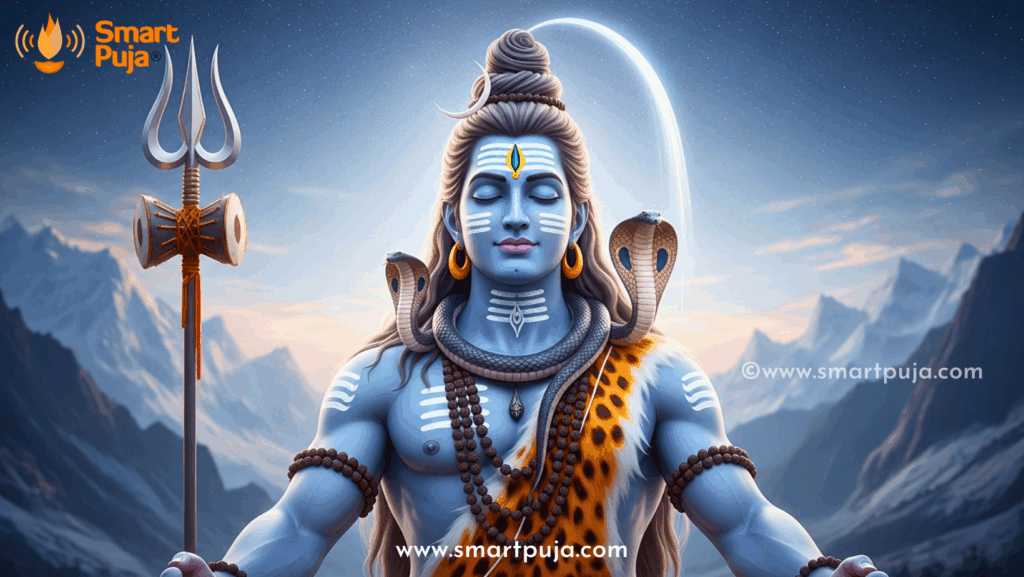
“I bow to Lord Shiva, who is as pure and white as camphor, who is the incarnation of compassion, who is the very essence of the universe, and who wears the king of serpents as a garland. I bow to Him, who always resides in the lotus-like heart, along with the Goddess Bhavani (Parvati).”
Listen to the Divine Chant
Listening to the mantra with the correct pronunciation helps align your internal vibrations. You can listen to the authentic chanting here:
2. Word-by-Word Meaning of Karpur Gauram
To truly unlock the spiritual depth of this mantra, one must understand the profound symbolism behind each Sanskrit word:
- Karpur (कर्पूर): Camphor.
- Gauram (गौरं): Pure white or fair-complexioned. Lord Shiva is described as being as radiantly white as camphor (often attributed to the holy ash or Bhasma smeared on his body).
- Karuna (करुणा): Compassion or mercy.
- Avataram (अवतारं): The incarnation or manifestation. Shiva is the ultimate manifestation of endless compassion.
- Sansara (संसार): The universe or the cycle of life, death, and existence.
- Saaram (सारं): The core, truth, or essence. Shiva is the only permanent truth in a temporary world.
- Bhujagendra (भुजगेन्द्र): The king of serpents (Vasuki).
- Haaram (हारम्): Garland. He wears the serpent king gracefully around his neck.
- Sada (सदा): Always or eternally.
- Vasantam (वसन्तं): Residing or dwelling.
- Hridaya-Aravinde (हृदयारविन्दे): In the lotus (Aravind) of the heart (Hridaya).
- Bhavam (भवं): To the Lord (Shiva, the source of creation).
- Bhavani-Sahitam (भवानीसहितं): Accompanied by Goddess Bhavani (Mother Parvati).
- Namaami (नमामि): I bow down or I surrender.
3. Karpur Gauram Mantra Meaning in Hindi (हिंदी अर्थ)
भारतीय संस्कृति में इस मंत्र का अत्यंत महत्व है। आइए जानते हैं इसका सरल और गहरा हिंदी अर्थ:
“जो कर्पूर (कपूर) के समान अत्यंत उज्जवल और गौर वर्ण वाले हैं, जो करुणा के साक्षात् अवतार हैं, जो इस पूरे संसार (सृष्टि) के एकमात्र सार हैं, और जो सर्पों के राजा (वासुकि) की माला धारण करते हैं।
वे भगवान शिव, जो माता भवानी (पार्वती) के साथ सदैव मेरे हृदय रूपी कमल में निवास करते हैं, मैं उन महादेव को बारंबार प्रणाम करता हूँ।”
4. When to Chant Karpur Gauram?
While this mantra can be chanted at any time to invoke peace, it holds maximum power when chanted during specific auspicious moments and rituals. It is the ultimate Aarti Mantra.
- During the Aarti: It is traditionally sung while rotating the camphor flame (Kapur Aarti) at the very end of any Puja. Burning camphor represents the burning away of the ego.
- During Rudrabhishek: Chanting this mantra while offering milk and holy water to the Shivling during a Rudrabhishek Puja amplifies the spiritual merits.
- On Pradosham: Reciting this during the twilight hours of Pradosham Vrat guarantees Lord Shiva’s immediate blessings.
- On Mahashivratri: It is a primary chant used during the midnight vigils of Mahashivratri.
- Daily Shiva Puja: Incorporating this into your daily morning prayers brings profound mental stability.
5. Spiritual Benefits of the Mantra
Sound is energy, and Vedic mantras are formulated to create highly specific frequencies. Chanting the Karpur Gauram Karunavataram mantra with devotion yields incredible benefits:
- Eradication of Ego: Just as camphor burns completely without leaving any ash, chanting this mantra helps dissolve our ego and negative traits completely into the divine fire.
- Mental Peace & Focus: The rhythmic sound of the mantra calms the nervous system, reducing anxiety, fear, and depression.
- Harmony in Relationships: Because the mantra explicitly bows to Shiva along with Bhavani (Parvati), it balances masculine and feminine energies (Shiva-Shakti) in the household, promoting marital bliss and harmony.
- Protection: Meditating upon the Lord who wears a poisonous serpent as an ornament gives the devotee the courage to face toxic people and dangerous situations fearlessly.
Explore More Powerful Shiva Mantras
Deepen your devotion by exploring our complete guides on other sacred Shiva chants:
Experience the Power of Rudrabhishek at Home
The truest way to experience the divine vibrations of the Karpur Gauram mantra is to hear it chanted by highly trained Vedic Pandits during a sacred Rudrabhishek Puja.
SmartPuja provides verified, experienced Pandits who perform authentic Shiva Pujas with flawless Sanskrit pronunciation. We bring the complete Puja Samagri to your doorstep!
Frequently Asked Questions
1. When should the Karpur Gauram mantra be chanted?
The Karpur Gauram mantra is traditionally chanted at the very end of a Puja or Havan, during the Aarti. It is especially powerful when chanted during Shiva Pujas like Mahashivratri or Rudrabhishek.
2. What is the origin of the Karpur Gauram mantra?
The Karpur Gauram mantra is an ancient Dhyana Shloka (meditation verse) used in Vedic Shiva worship. It is often attributed to Yajurvedic traditions and the Shiva Puranas.
3. Why is Lord Shiva compared to camphor (Karpur)?
Camphor (Karpur) is pure white and leaves no residue when burned. Lord Shiva is compared to camphor to symbolize his absolute purity, his radiant fair complexion (covered in Bhasma), and his ability to completely destroy the ego.
📍 Find Vedic Pandits in Your City