Unlocking the 16 Sanskars of Hinduism: A Sacred Journey…
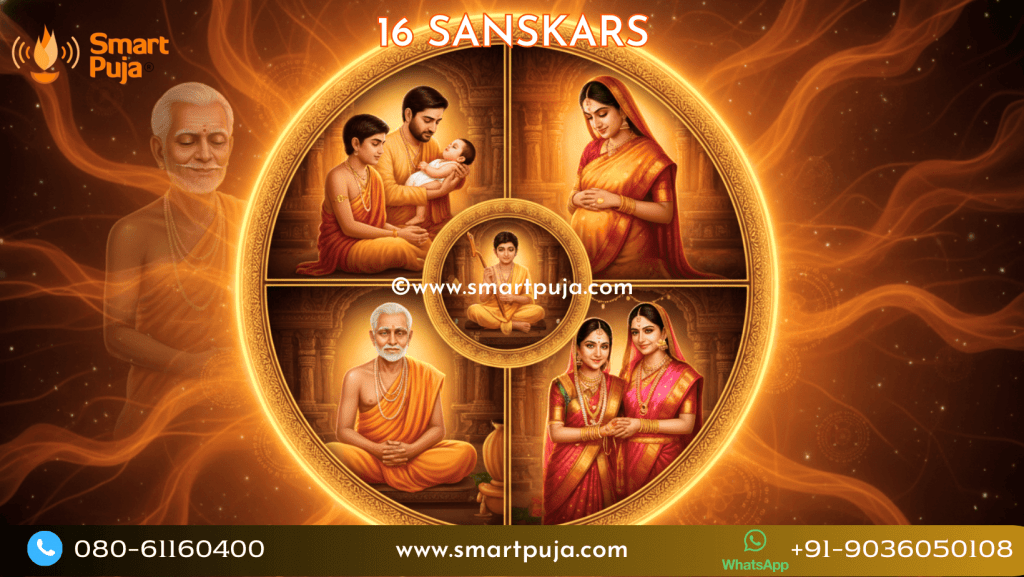
Unlocking the 16 Sanskars of Hinduism: A Sacred Journey to a Perfect Life
Authored by SmartPuja Vedic Team | Updated: February 2026
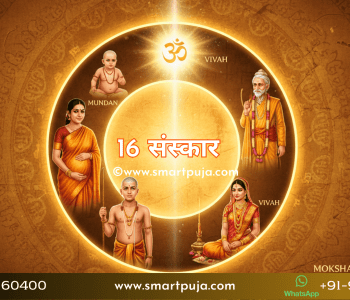
In the vast ocean of Vedic wisdom, life is viewed not merely as a biological existence but as a spiritual journey toward self-realization. To guide a human being through this journey, the ancient Rishis prescribed the 16 Sanskars of Hinduism (known in Sanskrit as Shodasha Samskaras).
The word “Sanskar” stems from the Sanskrit root “Sam” (together) and “Kara” (action), meaning “to refine,” “to polish,” or “to sculpt.” Just as a rough diamond is polished to reveal its brilliance, a human being undergoes these 16 sacraments to refine the body, mind, and soul.
From the moment of conception to the final farewell, these rituals ensure that every stage of life is sanctified. Ancient texts like the Gautama Dharmasutra and Manusmriti emphasize that these rituals remove impurities and bestow the individual with auspicious qualities.
The 16 Sanskars: Quick Summary List
Here is the complete list of the 16 Vedic sacraments that guide a Hindu from birth to death:
| # | Sanskar Name | Stage of Life | Purpose |
|---|---|---|---|
| 1 | Garbhadhan | Pre-Natal | Conception ritual for a healthy soul. |
| 2 | Punsavan | Pre-Natal | Fetus protection & development. |
| 3 | Simantonayana | Pre-Natal | Mental wellbeing of the mother. |
| 4 | Jatakarma | Birth | Welcome ritual for the newborn. |
| 5 | Namakaran | Childhood | Naming ceremony. |
| 6 | Nishkraman | Childhood | First outing (Sun/Moon darshan). |
| 7 | Annaprashan | Childhood | First solid food feeding. |
| 8 | Chudakarana | Childhood | Head shaving (Mundan). |
| 9 | Karnavedha | Childhood | Ear piercing for health. |
| 10 | Vidyarambha | Education | Initiation into alphabet/learning. |
| 11 | Upanayana | Education | Sacred Thread Ceremony. |
| 12 | Vedarambha | Education | Start of formal Vedic study. |
| 13 | Keshant | Education | First shaving of beard (Maturity). |
| 14 | Samavartan | Education | End of student life (Graduation). |
| 15 | Vivaha | Adulthood | Marriage (Grihastha Ashrama). |
| 16 | Antyeshti | Death | Funeral rites (Final sacrifice). |
🕉️ Perform Vedic Sanskars with Perfection
Whether it is Namakaran, Mundan, Upanayana, or Vivaha, the sanctity of a Sanskar depends on the purity of the ritual. SmartPuja connects you with experienced Vedic Pandits who perform these rituals with strict adherence to scriptures.
Phase 1: Pre-Natal Sanskars (Before Birth)
The journey of a Hindu soul begins before physical birth. These rituals are performed to ensure the health of the mother and the spiritual purity of the child in the womb.
1. Garbhadhan (Conception)
The Ritual of Conception: This is the first Sanskar, marking the beginning of life. It is not merely a physical act but a sacred prayer where the couple invites a virtuous soul to enter the womb.
2. Punsavan (Fetus Protection)
Performed during the third or fourth month of pregnancy, this ritual seeks divine protection for the fetus and its healthy physical development.
3. Simantonayana (Baby Shower)
Similar to a modern “Baby Shower,” this is performed in the seventh month. The husband parts the wife’s hair (Simanta) to uplift her spirits. The goal is to keep the mother happy, as her emotional state directly impacts the unborn child.
Phase 2: Childhood Sanskars (The Foundation)
These rituals are crucial milestones in a child’s early development, marking their integration into the family and society.
4. Jatakarma (Birth Ritual)
Performed immediately after birth, the father places a drop of honey and ghee on the baby’s tongue, whispering the name of God in the ear. It symbolizes the sweetness of life and the spark of wisdom.
5. Namakaran (Naming Ceremony)
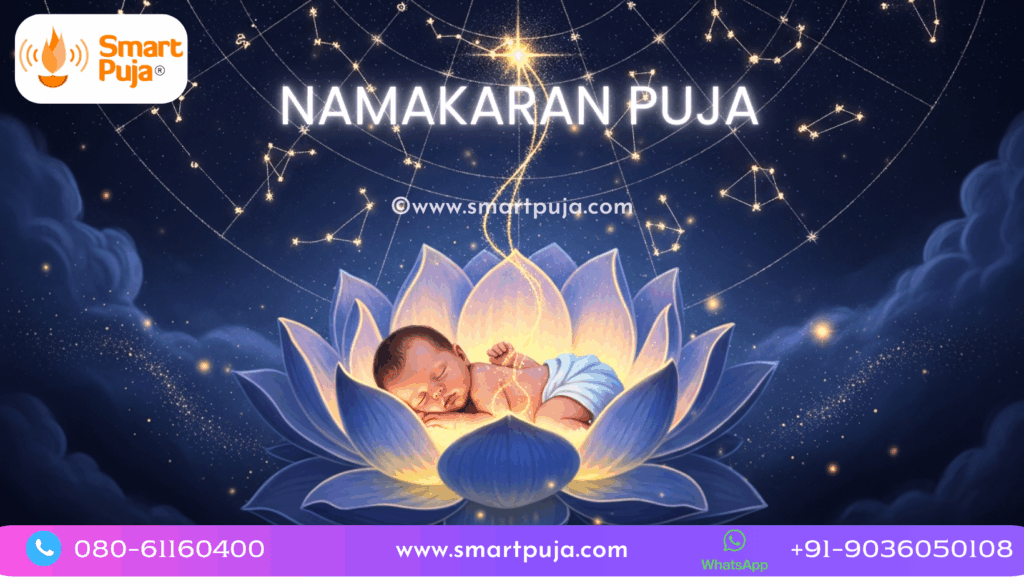
Usually performed on the 11th day, the Namakaran Sanskar is where the child receives their identity. The name is chosen based on astrological calculations (Nakshatra) to align the child with cosmic vibrations.
6. Nishkraman (First Outing)
Performed in the 4th month, this is the first time the baby is taken outside the house to see the Sun (Surya) and the Moon (Chandra), introducing them to the elements of nature.
7. Annaprashan (First Solid Food)
Performed in the 6th month, this marks the transition from milk to solid food (usually Kheer). It signifies that the baby’s digestive system is now ready for nourishment from the earth.
8. Chudakarana / Mundan (Head Shaving)
The first haircut or Mundan Sanskar is performed in the 1st or 3rd year. It symbolizes the removal of past-life impurities and promotes the growth of new, healthy hair and better blood circulation to the brain.
9. Karnavedha (Ear Piercing)
Piercing the ears is believed to activate specific acupressure points that help in intellectual development and maintaining the health of the reproductive organs.
Phase 3: Educational Sanskars (Knowledge)
10. Vidyarambha (Beginning of Knowledge)
Usually performed at age 5, the child is introduced to letters and numbers. They write their first alphabet on rice or slate, invoking Goddess Saraswati.
11. Upanayana (Sacred Thread Ceremony)
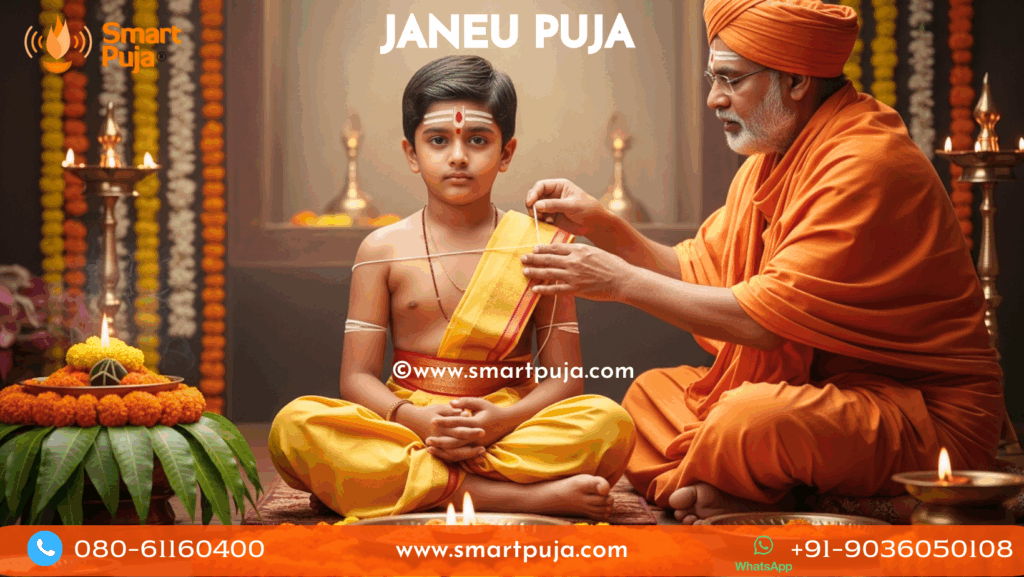
The Upanayana Sanskar is one of the most important rituals. The child receives the Janeu (Sacred Thread) and initiates the chanting of the Gayatri Mantra, marking their second birth (Dvija) into the world of spiritual knowledge.
12. Vedarambha (Study of Vedas)
Following Upanayana, the student begins the formal study of the Vedas and ancient scriptures under a Guru.
13. Keshant / Godan (First Shave)
Marking the transition to adulthood (around age 16), this ritual involves the first shaving of the beard. It signifies maturity and the vow of celibacy (Brahmacharya) during student life.
14. Samavartan (Graduation)
This marks the end of student life (Gurukul). The student takes a ceremonial bath and prepares to enter the householder phase (Grihastha Ashrama).
Phase 4: Adulthood & The Final Journey
15. Vivaha (Marriage)
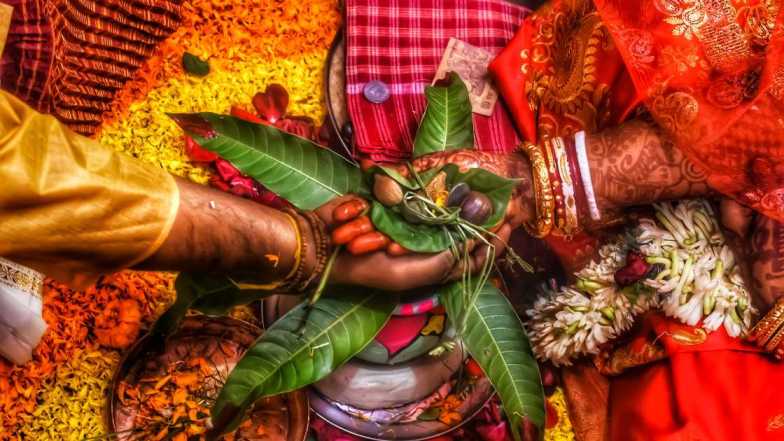
Vivaha Sanskar is considered the most important ritual in adulthood. It is not just a contract but a spiritual union of two souls to pursue Dharma (Duty), Artha (Wealth), and Kama (Desire) together.
16. Antyeshti (Funeral Rites)
The final Sanskar is Antyeshti (The Last Sacrifice). Upon death, the body is returned to the five elements (Panchamahabhuta) through cremation. This ritual aids the soul in severing ties with the physical world and continuing its journey toward the afterlife or Moksha.
Which Sanskars Can Be Performed at Home?
Modern life often confuses us about where to perform these sacred rituals. Here is a quick guide on where you can book our services:
🏡 Home Sanskars
Best done at home for hygiene and comfort.
- Namakaran (Naming)
- Annaprashan (First Food)
- Mundan (Head Shaving)
- Vidyarambha
🛕 Temple/Hall Sanskars
Usually requires larger space or sacred ground.
- Upanayana (Janeu)
- Vivaha (Marriage)
- Simantonayana (Godh Bharai)
Why Are Sanskars Important Today?
- Psychological Anchor: They provide stability during life’s major transitions.
- Social Bonding: They bring family and community together.
- Health Benefits: Rituals like Mundan and Karnavedha have proven hygienic and acupressure benefits.
- Spiritual Growth: They keep the individual connected to the divine purpose of life.
Book Your Sanskar Ceremonies with SmartPuja
In today’s fast-paced world, maintaining the sanctity of these 16 Sanskars can be challenging. SmartPuja is here to bridge the gap between tradition and modernity.
We provide:
- Verified Vedic Pandits fluent in your language.
- All Puja Samagri brought by the Pandit.
- Auspicious Muhurat calculation.
- Services in Bangalore, Mumbai, Delhi, Hyderabad, Pune, Chennai, Kolkata, and more.
Frequently Asked Questions