Makar Sankranti 2026 Date: Jan 14 or 15? Punya…
Makar Sankranti 2026: Date, Punya Kaal Muhurat & Significance
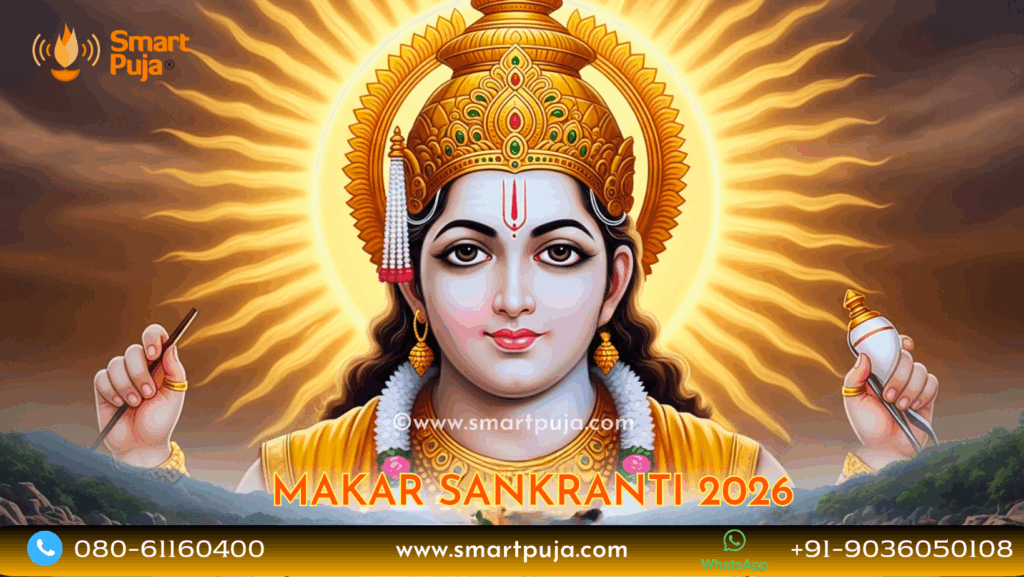
Makar Sankranti is the first major celestial event of the Gregorian calendar, celebrated with tremendous zeal across India. Dedicated to Lord Surya (Sun God), it marks the sun’s transit into Makara Rashi (Capricorn), signaling the end of winter and the beginning of the auspicious Uttarayan period (Sun’s northward journey).
While the festival is known by many names—Pongal in Tamil Nadu, Lohri in Punjab, Uttarayan in Gujarat, and Magh Bihu in Assam—the essence remains the same: gratitude to nature for the harvest.
☀️ Start 2026 with Divine Blessings
The transition of the Sun is the most powerful time to remove Doshas and invite prosperity. Book Vedic Pandits for Sankranti Special Pujas at your home.
- Surya Puja & Havan (For Health & Career)
- Satyanarayan Puja (For Prosperity)
- Griha Pravesh Puja (New Beginnings)
Makar Sankranti 2026 Date & Exact Muhurat
In 2026, the Sun enters Capricorn in the afternoon. Hence, the main Daan and Punya rituals should be performed during the Afternoon Punya Kaal.
⚠️ Note: While the technical Punya Kaal is in the afternoon, taking a Holy Bath (Snan) during the morning Brahma Muhurta (05:20 AM – 06:15 AM) is traditionally considered essential for purification.
Tithi timings and Parana windows may vary slightly based on your location (sunrise time). Please check local Panchang for precise timings.
Significance: Why 2026 is Special?

Makar Sankranti is unique because it follows the Solar Cycle rather than the Lunar calendar. In 2026, this transit holds special astrological significance.
- Uttarayan Begins: This marks the “Day of the Gods.” The doors of Vaikuntha are said to open, making it the ideal time for spiritual initiation and Griha Pravesh.
- Sun Meets Saturn: Astrologically, the Sun (Father) enters the house of Saturn (Son/Capricorn). Celebrating this day resolves father-son conflicts and brings family harmony.
- Harvest Gratitude: Farmers offer their first harvest (Sugarcane, Rice, Turmeric) to the Sun God, thanking nature for abundance.
Rituals: How to Celebrate at Home?
Rituals may vary by state, but the “Sutra” (thread) of the festival involves three things: Snan (Bath), Daan (Charity), and Dhyana (Prayer).
1. Holy Bath (Pavitra Snan)
Wake up early. If you cannot visit a river, mix Black Sesame Seeds (Til) and a few drops of Gangajal in your bathing water. Chant “Ganga Cha Yamuna Chaiva Godavari Saraswati” to invoke holy rivers.
2. Surya Puja & Mantra
Offer Arghya (water, red flower, jaggery) to the rising sun. For 2026, chanting the Surya Gayatri Mantra during the afternoon Punya Kaal (3:13 PM – 4:58 PM) is highly beneficial.
“Om Bhaskaraya Vidmahe, Mahadyutikaraya Dhimahi, Tanno Aditya Prachodayat”
3. The “Mahadaan” (Great Charity)
Since the 2026 Punya Kaal is in the afternoon, perform charity before sunset. Donating these items is believed to remove past sins:
- Til-Gud (Sesame & Jaggery): For health and removing Saturn dosha.
- Khichdi (Rice & Dal): For abundance.
- Blankets: To protect against the cold, symbolizing protection from hardships.
Regional Celebrations Across India

Plan Your Puja with SmartPuja
The start of Uttarayan is the most auspicious time for new beginnings. Whether it is a New Office Opening, House Warming, or a Satyanarayan Puja for family peace, ensure you book a verified Vedic Pandit.
SmartPuja offers hassle-free puja services in:
Bangalore | Mumbai | Delhi | Pune | Hyderabad | Chennai | Kolkata | Ahmedabad | & 30+ Cities
Frequently Asked Questions
1. Is Makar Sankranti on Jan 14 or Jan 15 in 2026?
Makar Sankranti 2026 is on Wednesday, January 14. The Sun enters Capricorn at 3:13 PM on this day.
2. Can we do Puja in the evening on Sankranti 2026?
Yes. Since the Sankranti moment is at 3:13 PM, the auspicious Punya Kaal lasts until 5:45 PM. This is the best time for Puja and Daan.
3. Why do we eat Til-Gud on Sankranti?
Scientifically, Sesame (Til) and Jaggery (Gud) keep the body warm and boost immunity during winter. Spiritually, it symbolizes resolving conflicts by saying, “Til gul ghya, god god bola” (Eat sweet, speak sweet).
📍 Find Vedic Pandits in Your City