Maha Shivaratri 2026 (15 Feb): Nishita Kaal Timing, Puja…
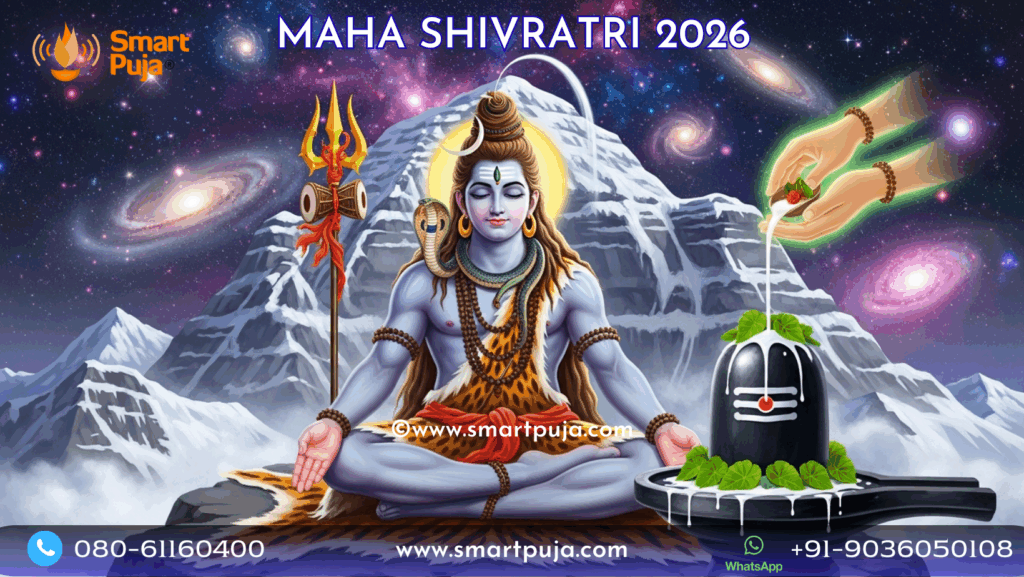
Maha Shivaratri 2026 Date, Puja Muhurat & Vidhi
Last Updated: February 2026
Maha Shivaratri 2026 will be observed on Sunday, 15 February 2026. The most auspicious time for Puja, known as Nishita Kaal, falls between 12:09 AM and 01:01 AM on 16 February. Below you will find the complete 4 Prahar timings, fasting rules, city-wise muhurat, and step-by-step puja vidhi.
⚡ Maha Shivaratri 2026 Quick Facts
- Date: 15 February 2026 (Sunday)
- Nishita Kaal (Best Muhurat): 12:09 AM – 01:01 AM (16 Feb)
- Chaturdashi Tithi Begins: 06:11 PM (15 Feb)
- Parana (Fast Breaking): 06:57 AM onwards (16 Feb)
- Best Ritual: Rudrabhishek with Milk & Gangajal
📌 Quick Navigation
Maha Shivaratri is the “Great Night of Shiva,” a celestial event observed in honor of Lord Shiva. Unlike other festivals of celebration, this is a night of vigil, fasting, and deep meditation to overcome darkness and ignorance.
📅 Maha Shivaratri 2026 Date & Muhurat
In 2026, the Chaturdashi Tithi begins on the evening of Feb 15th. Below are the standard timings for India (IST).
| Event | Date & Time (IST) |
|---|---|
| Shivaratri Date | February 15, 2026 (Sunday) |
| Nishita Kaal (Main Puja) | 12:09 AM to 01:01 AM (Feb 16) |
| Parana (Fast Break) | 06:57 AM to 03:24 PM (Feb 16) |
🕰️ 4 Prahar Puja Timings (Night Vigil)
For devotees performing the all-night vigil (Jagaran), the night is divided into four Prahars. Performing Abhishekam during these times is highly auspicious.
| Prahar | Time Interval |
|---|---|
| First Prahar | 06:11 PM to 09:23 PM (Feb 15) |
| Second Prahar | 09:23 PM to 12:35 AM (Feb 16) |
| Third Prahar | 12:35 AM to 03:47 AM (Feb 16) |
| Fourth Prahar | 03:47 AM to 06:59 AM (Feb 16) |
📍 City-Wise Nishita Kaal Muhurat
| City | Nishita Kaal Time |
|---|---|
| New Delhi | 12:09 AM – 01:01 AM |
| Mumbai | 12:28 AM – 01:19 AM |
| Bangalore | 12:15 AM – 01:06 AM |
| Kolkata | 11:25 PM – 12:16 AM |
Select Your Shivratri Puja
Perform these authentic Vedic rituals at home to remove negativity and invoke Shiva’s grace.
Rudrabhishek Puja
The most powerful puja. Involves bathing the Linga with Panchamrit and 108 chants.
Maha Mrityunjaya Havan
The “Conqueror of Death” ritual. Best for health issues, longevity, and recovering from illness.
Rudra Homa
A powerful fire lab to destroy negative karma and bring overall prosperity and peace.
📜 Why We Celebrate: The 3 Great Legends
The significance of Shivaratri is rooted in Puranic history. Here are the three main reasons why this night is revered:
1. The Celestial Wedding
This is the night Lord Shiva married Goddess Parvati. It represents the union of Shiva (Pure Consciousness) and Shakti (Cosmic Energy). Devotees celebrate this as a festival of union and balance.
2. The Legend of Neelkanth
During Samudra Manthan, a deadly poison (Halahala) emerged. To save the universe, Shiva drank it but held it in his throat, turning it blue. We stay awake to thank him for protecting the cosmos.
3. The Tandava Nritya
It is believed that on this night, Shiva performs the Rudra Tandava—the cosmic dance of creation, preservation, and destruction.
🕉️ Deep Symbolism of Offerings
🥛 Milk (Purity)
Abhishekam with milk washes away bad karma.
🍯 Honey (Sweetness)
Removes bitterness and brings charm to speech.
🌿 Bel Patra (Surrender)
The 3 leaves represent the 3 eyes of Shiva.
✨ 2026 Zodiac Offerings (Rashi)
According to Vedic Astrology, offering specific items based on your Rashi brings special blessings:
Red Flowers
Curd & Milk
Bel Patra
Raw Milk
Jaggery Water
Dhatura
Sugarcane Juice
Honey
Yellow Flowers
Black Sesame
Coconut Water
Saffron Milk
Frequently Asked Questions
Is Shivaratri on 15 or 16 February 2026?
It is observed on the night of Feb 15th. The Nishita Kaal Puja happens past midnight, technically falling on the early morning of Feb 16th.
Can unmarried girls fast on Shivaratri?
Yes, unmarried girls traditionally observe this fast to seek a husband with qualities like Lord Shiva (loyal, calm, and protective) and to remove obstacles in marriage.
What to eat during Shivaratri fast?
You can consume ‘Phalahar’ items: Fruits, Milk, Sabudana, Kuttu (Buckwheat) flour, and dry fruits. Strictly avoid rice, wheat, pulses, onions, garlic, and common salt.
Is Shivaratri once or twice a year?
Shivaratri happens every lunar month (12 times a year). However, Maha Shivaratri is the grandest one, occurring only once a year in Feb/March.
Can we perform Rudrabhishek at home?
Yes, absolutely. While it is beneficial to visit a temple, performing Rudrabhishek at home with a Vedic Pandit brings immense purity and peace to the household.
Experience the Divine at Home
Don’t just read about it. Experience the power of Vedic Mantras.
📍 Find Vedic Pandits in Your City