Ultimate Hindu Marriage Ceremony Guide & 2026 Vivah Muhurat…
The Most Sacred of the 16 Sanskars
The Ultimate Guide to the Hindu Marriage Ceremony & 2026 Vivah Muhurat
Last Updated: February 2026 | Verified by Senior Vedic Pandits
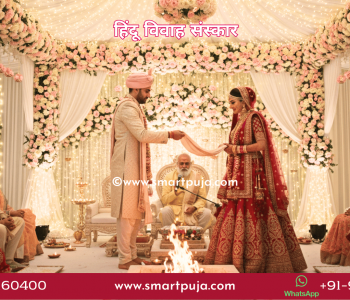
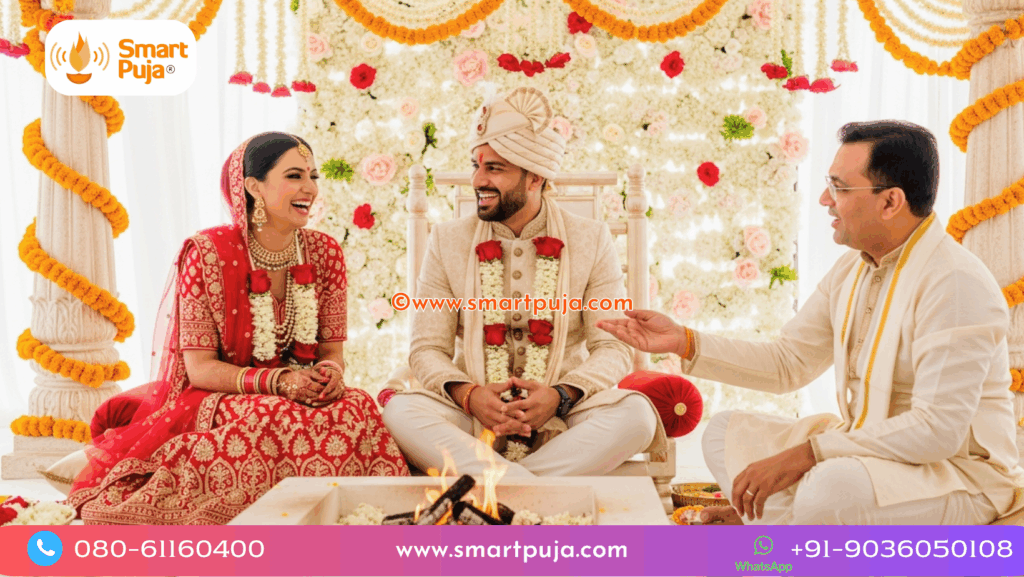
In the Vedic tradition, the Hindu Marriage Ceremony (Vivah Samskara) is not merely a legal or social contract; it is a profound spiritual union of two souls. Whether you are looking to deeply understand the core rituals, find a highly verified Pandit, or download the Marriage Muhurat 2026 Calendar PDF, this long-form comprehensive guide covers it all.
The Scriptural Foundations of Vivaha
To truly appreciate an Indian wedding, one must understand its roots. The structure of a Hindu wedding is deeply embedded in ancient texts like the Grihya Sutras (specifically the Ashvalayana and Paraskara) and the Manusmriti.
These Dharma Shastras outline the Vivaha as the most vital transition in human life. It marks the shift from Brahmacharya (the student life of learning and discipline) into the Grihastha Ashrama (the Householder life). According to the Vedas, the purpose of marriage is not just companionship, but to fulfill three essential cosmic duties:
- Dharma (Duty): Performing religious duties, helping society, and conducting sacrifices together. A single person cannot perform a Vedic Yajna; a wife (Sahadharmini) is required.
- Praja (Progeny): The procreation of healthy, righteous children to continue the family lineage and repay the debts to the ancestors (Pitri Rina).
- Rati (Pleasure): Mutual love, companionship, emotional support, and physical fulfillment within the boundaries of Dharma.
Hindu Wedding Rituals: A Step-by-Step Guide
While traditions vary immensely from the snowy mountains of Kashmir to the tropical shores of Kanyakumari, the core Vedic structure remains beautifully unified. The sacred fire (Agni) acts as the ultimate divine witness (Sakshi) to all vows. Here is the chronological flow of a traditional Hindu Marriage Ceremony that a SmartPuja Verified Pandit conducts with absolute precision:
1. Ganesha Puja & Punyahavachanam
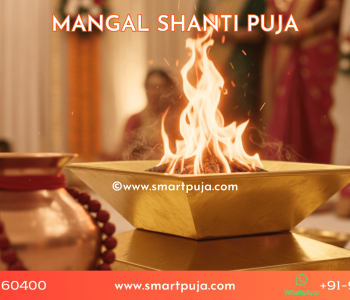
No auspicious Hindu ceremony begins without invoking Lord Ganesha, the Vighnaharta (remover of obstacles). The Pandit chants mantras to ensure the wedding is completed without any hurdles. This is immediately followed by Punyahavachanam, where a Kalash (copper pot) filled with holy water and mango leaves is used to purify the mandap space, the puja samagri, and the minds of the couple.
2. Var Aagman & Madhuparka (Welcoming the Groom)
When the groom arrives at the mandap (Var Aagman), he is not just seen as a man, but as an embodiment of Lord Vishnu. He is welcomed by the bride’s father who washes his feet and offers him a seat. He is then offered the Madhuparka—a highly symbolic mixture of honey, curd, and ghee. This sweet offering represents the expectation that the groom’s speech and actions will remain sweet, healthy, and nourishing throughout the marital journey.
3. Kanyadaan (The Gift of the Maiden)
Kanyadaan is considered the highest form of Daan (donation/gift) a householder can perform in their lifetime. The bride’s father places his daughter’s right hand into the groom’s right hand, pouring holy water over them. By doing this, he “gives away” his most precious daughter, asking the groom to never fail her in his pursuit of Dharma (duty), Artha (wealth), and Kama (love). The groom accepts, acknowledging the profound responsibility.
4. Panigrahana (Holding the Hand)
The groom accepts the bride by holding her hand firmly. As he does this, he recites Vedic mantras promising lifelong protection. He says, “I hold your hand for the sake of happiness, that you may live to a ripe old age with me as your husband. The divine gods—Bhaga, Aryama, Savita, and Purandhi—have given you to me to fulfill the duties of a householder.”
5. Agni Pradakshina / Mangal Phera
The couple walks around the holy fire, with their garments tied together (Gathbandhan), signifying the union of their souls. Usually, four rounds are taken. The first three rounds are led by the groom, symbolizing his leadership in providing Dharma, Artha, and Kama. The final round is led by the bride, symbolizing her leadership in guiding the family toward Moksha (spiritual liberation).
6. Laja Homa (Offering of Puffed Rice)
The bride’s brother places puffed rice (Laja or Lava) into the bride’s cupped hands. The groom places his hands beneath hers, and together they offer it into the blazing sacred fire. This beautiful ritual symbolizes a prayer to Yama (the Lord of Death) to grant the groom a long, healthy life, ensuring the bride is never widowed and their lineage prospers.
7. Saptapadi (The Seven Holy Steps)
This is the legal and spiritual climax of a Hindu wedding. The couple takes seven steps together towards the North, taking seven specific vows. According to the Hindu Marriage Act, the marriage is legally binding only after the seventh step is completed.
- Step 1: For nourishment, food, and provisions.
- Step 2: For physical, mental, and spiritual strength.
- Step 3: For wealth, prosperity, and righteous living.
- Step 4: For mutual happiness, trust, and knowledge.
- Step 5: For healthy, righteous children (Progeny).
- Step 6: For a long life together in peace.
- Step 7: For eternal friendship, loyalty, and companionship.
8. Sindoor Daan & Mangalsutra
To finalize the physical transition, the groom applies bright red vermilion (Sindoor) to the bride’s hair parting and ties the Mangalsutra (sacred golden necklace) around her neck. These are the physical markers of her new status as a married woman and the revered goddess of her new home (Grihalakshmi).
Regional Variations: One Platform, All Traditions
India is a land of diversity. A Tamil Brahmin wedding is vastly different from a Punjabi Wedding. At SmartPuja, we don’t just provide a generic priest; we provide Community-Specific Shastris:
| Region / Tradition | Specialized Rituals We Cover |
|---|---|
| North Indian (UP/Bihar) | Jaimala, Mangal Phera, Sindoor Daan, Chumawan, Parichavan |
| South Indian (Tamil/Telugu) | Kashi Yatra, Oonjal, Mangalya Dharanam, Talambralu, Arundhati Darshanam |
| Maharashtrian | Antarpat, Mangalashtaka, Laxmi Narayan Puja, Saptapadi |
| Bengali | Saat Paak, Shubho Drishti, Mala Badal, Sindoor Daan |
🌸 Shubh Vivah Dates 2026 in India 🌸
To ensure the rituals listed above yield the maximum cosmic benefit, they must be performed on an auspicious date. Below is the verified list of 2026 Hindu Marriage Ceremony Dates based on Drik Panchang.
| Month (2026) | Total Auspicious Dates |
|---|---|
| January | 4 Dates |
| February | 10 Dates (Peak) |
| March | 6 Dates |
| April | 5 Dates |
| May | 5 Dates (Peak) |
| June | 1 Window (Jun 21-29) |
| August – October | 0 Dates (Chaturmas) |
| Nov – Dec | 11 Dates |
January 2026
| Date | Day | Nakshatra |
|---|---|---|
| Jan 14, 2026 | Wednesday | Anuradha |
| Jan 23, 2026 | Friday | Uttara Bhadrapada |
| Jan 25, 2026 | Sunday | Revati |
| Jan 28, 2026 | Wednesday | Rohini |
February 2026 (Peak Season)
| Date | Day | Nakshatra |
|---|---|---|
| Feb 5-6, 2026 | Thu-Fri | Uttara Phalguni, Hasta |
| Feb 8, 10, 2026 | Sun, Tue | Swati, Anuradha |
| Feb 12, 14, 2026 | Thu, Sat | Mula, Uttara Ashadha |
| Feb 19-21, 2026 | Thu-Sat | Uttara Bhadrapada, Revati |
| Feb 24-26, 2026 | Tue-Thu | Rohini, Mrigashira |
March 2026
| Date | Day | Nakshatra |
|---|---|---|
| Mar 1, 3, 4, 2026 | Sun-Wed | Magha, Phalguni |
| Mar 7-9, 2026 | Sat-Mon | Swati, Anuradha |
| Mar 11-12, 2026 | Wed-Thu | Mula |
April 2026
| Date | Day | Nakshatra |
|---|---|---|
| Apr 15, 2026 | Wednesday | Uttara Bhadrapada |
| Apr 20-21, 2026 | Mon-Tue | Rohini, Mrigashira |
| Apr 25-29, 2026 | Sat-Wed | Magha, Phalguni, Hasta |
May 2026
| Date | Day | Nakshatra |
|---|---|---|
| May 1, 3, 2026 | Fri, Sun | Swati, Anuradha |
| May 5-8, 2026 | Tue-Fri | Mula, Uttara Ashadha |
| May 13-14, 2026 | Wed-Thu | Uttara Bhadrapada, Revati |
June 2026
| Date | Day | Nakshatra |
|---|---|---|
| Jun 21-29, 2026 | Multiple | Uttara Phalguni, Hasta, Swati, Anuradha, Mula |
🚫 Note on Chaturmas (Aug-Oct 2026)
No auspicious Hindu Marriage Ceremony Muhurats exist in August, September, and October due to Lord Vishnu’s Yog Nidra. This is the ideal time to plan for your Honeymoon or Griha Pravesh.
November & December 2026
| Date | Nakshatra |
|---|---|
| Nov 21, 24, 25, 26 | Revati, Rohini, Mrigashira |
| Dec 2, 3, 4, 5, 6, 11, 12 | Phalguni, Hasta, Swati, Mula |
Wedding Planning Resources
Complete your Hindu Marriage Ceremony wedding preparations with our expert guides:
विवाह पूजा सामग्री लिस्ट (Hindi)
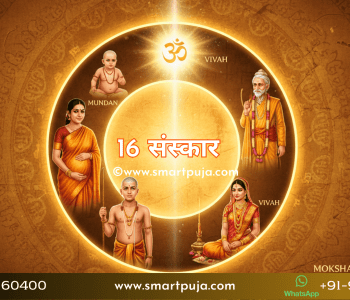
The 16 Sanskars of Hinduism
Meaning of Vivaha Sanskar
How to Book Your Marriage Pandit Online
- Visit: SmartPuja Hindu Marriage Ceremony Service.
- Details: Share your city, date, and community (e.g., Hindi, Kannada, Tamil, Telugu, Marathi).
- Consultation: We discuss specific rituals (Lagna duration, Homas).
- Confirm: Pay a token advance to block the Pandit and we handle the rest (including Samagri!).
Frequently Asked Questions
A: These are standard dates based on the Hindu Panchang. However, the exact Lagna (ascendant) varies by city due to sunrise timings. We highly recommend a consultation before finalizing the venue.
A: Yes, legal court marriages are completely allowed. However, traditional Vedic rituals around the holy fire are paused during this period.
A: Yes! SmartPuja Pandits frequently travel for destination weddings across India. Please contact us well in advance to block their calendar.
A: February and May are the most popular months for weddings in 2026 due to the highest number of auspicious planetary alignments and dates available.